
AmazingBuyz is reader-supported. When you buy through links on our site, we may earn an affiliate commission at no extra cost to you. Learn more.
The best electric SUV for most families right now is the Hyundai Ioniq 9: up to 335 miles of EPA range, the most cargo space behind the third row of any three-row electric SUV here, an IIHS Top Safety Pick+ and a Good rating for car seat anchors. The Kia EV9 is the better buy if price matters most, and the Volkswagen ID. Buzz is still the roomiest electric minivan if you can find one. Below we compare nine family EVs on the things parents actually ask about: range in winter, charging at home and on road trips, third-row space, LATCH anchors and crash-test results.
Part of our Family Cars guides, where we answer the questions parents actually ask about seats, car seats and cargo.

The short answer
- Best overall: Hyundai Ioniq 9. Long range (311 to 335 miles EPA), 21.9 cu ft behind the third row, four full LATCH positions rated Good by IIHS, Top Safety Pick+ and five NHTSA stars. Starts at $58,955.
- Best value three-row: Kia EV9. Starts at $54,990 for 2027. The Light Long Range ($57,990) gets 305 miles of EPA range. Same safety credentials as the Ioniq 9, slightly less cargo space.
- Most efficient and easiest road trips: Tesla Model Y L. 328 miles of EPA range and the Supercharger network, but only 14.8 cu ft behind the third row, six seats only, and no IIHS or NHTSA crash ratings yet.
- Most space: Volkswagen ID. Buzz. A true minivan with 42.4 inches of third-row legroom and five full LATCH positions, but range is short (231 to 234 miles) and VW has paused new US models until the 2028 model year.
- Premium picks: Rivian R1S (up to 410 miles, Top Safety Pick+), Volvo EX90 (Top Safety Pick+, smallest cargo area) and Cadillac Vistiq (not yet crash-tested, open third-row seat recall).
- If two rows are enough: Hyundai Ioniq 5 or Chevrolet Equinox EV, both from about $35,000.
Family EVs compared: specs at a glance
| Vehicle (model year) | Starting price* | Seats | Cargo behind 3rd / 2nd row (cu ft) | 3rd-row legroom | AWD | EPA range | EPA kWh/100 mi | LATCH positions | IIHS LATCH rating | IIHS award | NHTSA overall | Charge port |
|---|---|---|---|---|---|---|---|---|---|---|---|---|
| Hyundai Ioniq 9 (2026) | $58,955 | 6–7 | 21.9 / 46.7 | 31–32 in | Yes (SE and up) | 311–335 mi | 37–40 | 4 full + 1 tether-only | Good | Top Safety Pick+ | 5 stars | NACS |
| Kia EV9 (2027) | $54,990 | 6–7 | 20.2 / 43.5 | 29.9–32.0 in | Yes (Wind and up) | 230–305 mi | 38–41 | 4 full + 1 tether-only | Good | Top Safety Pick+ | 5 stars | NACS |
| Tesla Model Y L (2027) | $61,990 | 6 | 14.8 / 38.0 | About 31 in | Standard | 328 mi | 30 | Not published | Not rated | Not rated | Not rated | NACS |
| Volkswagen ID. Buzz (2025) | $59,995 | 6–7 | 18.6 / 75.5 | 42.4 in | Yes (Pro S Plus) | 231–234 mi | 41–42 | 5 full (7-seat) | Good+ | None | 5 stars | CCS1 (NACS adapter extra) |
| Rivian R1S (2027) | $83,990 | 7 (6 optional) | 17.6 / 48.6 | About 33 in | Standard | 289–410 mi | 39–50 | 4 full + 1 tether-only | Good | Top Safety Pick+ | Not rated | NACS |
| Volvo EX90 (2026) | $76,695 | 6–7 | 11.4 / 24.4–24.6 | About 31.9 in | Yes (Twin Motor) | 276–305 mi | 34–39 | 4 full + 1 tether-only | Acceptable | Top Safety Pick+ | 5 stars (AWD) | CCS1 + NACS adapter included |
| Cadillac Vistiq (2027) | $77,500 | 6–7 | 15.2 / 43.0 | 30.6 in | Standard | 300–305 mi | 39 | Not published | Not rated | Not rated | Not rated | NACS |
| Hyundai Ioniq 5 (2027, two rows) | $35,250 | 5 | — / 26.3 | — | Yes | 245–318 mi | 29–36 | 2 full + center tether | Acceptable | Top Safety Pick | 5 stars | NACS |
| Chevrolet Equinox EV (2027, two rows) | $34,995 | 5 | — / about 26 | — | Yes | 307–319 mi | 31–33 | Not published | Not rated | Not rated | 5 stars (2026) | NACS |
*Base trim price before destination (destination adds roughly $1,400 to $2,000). Ranges cover the main trims; EPA ratings for the 2027 EV9 were not yet posted, so we list its 2026 ratings, which Kia carries over. LATCH counts and LATCH ratings come from IIHS; the Ioniq 5 count includes a center seat with a tether anchor only. EPA figures from fueleconomy.gov, crash ratings from iihs.org and nhtsa.gov, everything else from manufacturer spec pages and reviews linked in Sources. Compiled November 2026. The Tesla Model X is not listed because Tesla ended production in spring 2026.
How we compared these EVs
We did not test-drive these vehicles or test-fit car seats ourselves. We compiled manufacturer specs, EPA range and efficiency data, IIHS and NHTSA crash and LATCH ratings, and findings from expert reviewers such as Edmunds and Cars.com, whose Car Seat Check installs real seats in each vehicle. Where sources disagree (cargo figures for the Tesla and Rivian vary by several cubic feet depending on how they are measured), we give the manufacturer or EPA figure and note the range.
Car seats in electric SUVs: what to check
The good news: the three-row EVs that IIHS has evaluated all have at least four full LATCH positions (two lower anchors plus a top tether), so two car seats in the second row and two in the third is realistic on paper. That’s more than many gas SUVs offer. A few things are specific to EVs and worth knowing:
- Floors are higher. The battery sits under the cabin floor, so your knees ride higher in the back rows. That matters less for kids in car seats and more for adults in the third row. Edmunds found the Model Y L’s third-row cushions sit low relative to the floor, and Cars.com noted that a rear-facing seat in the EV9’s second row leaves almost no legroom behind it.
- Third-row access with seats installed. Captain’s chairs give a center aisle. The ID. Buzz’s second-row chairs tilt and slide forward even with a forward-facing seat installed, according to Edmunds. The Model Y L’s second-row chairs do not tilt or fold, so access is tighter. Cars.com gave the EV9 a C for third-row access and the Ioniq 9 a B.
- Three across is hard in most of these. Cars.com could not fit three car seats across in the ID. Buzz, R1S or EX90 as tested. If you need three across in one row, start with our guide to SUVs and minivans that fit 3 car seats and our narrowest car seats for 3 across.
- Check tether behavior in captain’s chairs. In Australia, two car seat makers advised against using their tethered seats in the Model Y L’s second-row chairs because the tether can slip. We have not seen a US advisory, but it is a good reminder to read both manuals and get your install checked.
General rules apply to every vehicle. NHTSA says to keep children rear-facing as long as possible and to always use the top tether on forward-facing seats. The American Academy of Pediatrics says lower anchors and the seat belt are equally safe, so use one or the other (not both, unless both manufacturers allow it), and note that lower anchors have a weight limit of 65 lb for the seat and child combined. Kids under 13 belong in the back seat. Bring your own seats to the dealer, then have a certified Child Passenger Safety Technician check the install; Safe Kids Worldwide lists free checks near you. Shopping for seats? See our best convertible car seats and best infant car seats.
Cargo and stroller fit
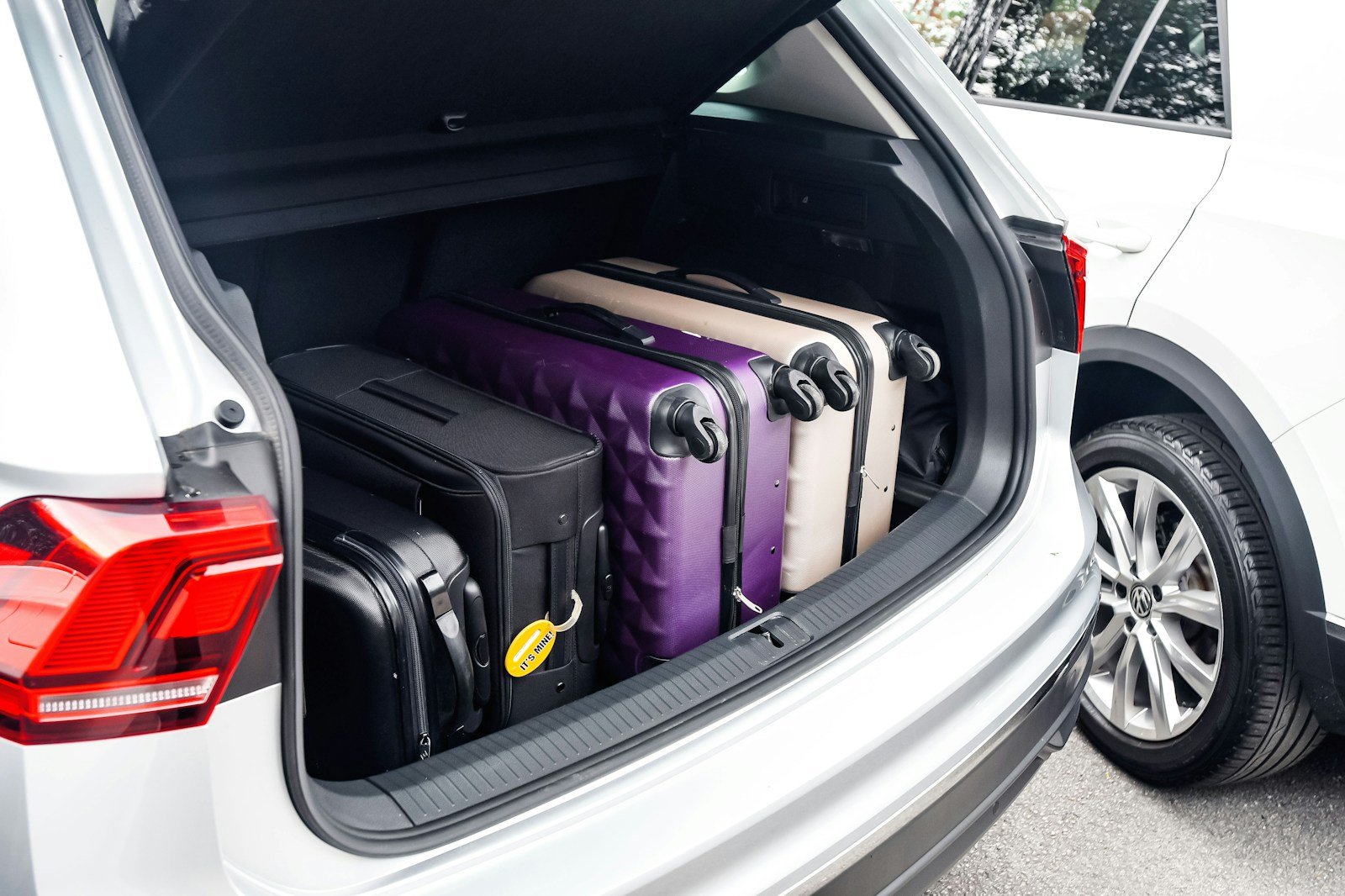
The biggest gap between these EVs isn’t range; it’s the trunk with all seats up. That is how most families drive day to day, so it’s the number to compare.
- ID. Buzz: 18.6 cu ft behind the third row and a tall, boxy opening. Fold the third row and you get 75.5 cu ft, more than any SUV here.
- Ioniq 9 (21.9 cu ft) and EV9 (20.2 cu ft): enough for a full-size folded stroller plus a few grocery bags. Both also have a small front trunk.
- Rivian R1S (17.6 cu ft): a bit less, but the large frunk swallows charging cables and soft bags.
- Cadillac Vistiq (15.2 cu ft) and Tesla Model Y L (14.8 cu ft, plus a 4.1 cu ft frunk): a compact travel stroller is the safer bet with every seat in use. Edmunds also flagged the Vistiq’s high load floor.
- Volvo EX90 (11.4 cu ft): the smallest cargo area here. Plan on a compact fold stroller or folding the third row.
If your cargo area is on the small side, a compact-fold stroller is the cheapest fix. Our best travel strollers guide lists folded dimensions, and our best strollers guide covers full-size models if you have room.
Safety ratings explained in plain words
IIHS Top Safety Pick+ is the toughest award from the Insurance Institute for Highway Safety. For 2026 it requires good results in the updated moderate overlap test, which checks how well a rear-seat passenger (often a child) is protected, plus the updated side test, which simulates being hit by a larger SUV. The Ioniq 9, EV9, R1S and EX90 all earned it. NHTSA’s 5-Star ratings are the government’s separate program; five stars overall is the top score. “Not rated” means the vehicle hasn’t been tested yet, not that it failed. The Model Y L and Vistiq are new enough that neither IIHS nor NHTSA had published crash results when we checked.
IIHS LATCH ratings grade how easy the anchors are to find and use: Good+, Good, Acceptable, Marginal or Poor. Easier anchors mean fewer mistakes, so this rating is worth weighing alongside crash scores.
One more EV-specific point: electric SUVs are heavy. IIHS notes that weight helps protect the people inside but puts others on the road at more risk, and heavier vehicles take longer to stop. It’s a reason to keep tires properly inflated and leave extra following distance.
Check recalls before you buy. Several of these have family-relevant recalls: the EV9 (front passenger airbag occupant detection), the Ioniq 9 (second-row power seats on Limited and Calligraphy trims may not detect an occupant, fixed with a software update) and the Vistiq (power-folding third row may not reverse when blocked; dealers are disabling the power-fold feature until a final fix). Enter the VIN at nhtsa.gov/recalls for any car you’re considering, new or used.
Range, winter and road trips
EPA range is measured in mild conditions. Cold weather cuts it: Recurrent’s 2025–26 study of more than 30,000 EVs found they kept about 78% of their range near freezing and about 70% at 20°F on average. AAA’s earlier testing found a 41% drop at 20°F with the heater running. So a family SUV rated for 320 miles might realistically cover about 220 to 250 miles on a cold highway day. If you live where winters are harsh, give extra weight to the long-range trims, and see our best family cars for snow guide.
Charging stops. Kia says the EV9 goes from 10% to 80% in about 24 minutes on a 350 kW charger (about 34 minutes at a Tesla Supercharger). Hyundai quotes 24 minutes for the Ioniq 9 on a 350 kW charger and about 40 minutes at a Supercharger. Volvo claims 22 minutes for the EX90, VW about 26 minutes for the ID. Buzz, and Tesla’s Model Y L takes about 30 minutes. With kids, a 25- to 40-minute stop roughly matches a bathroom-and-snack break.
Charge ports. Most of these now have the Tesla-style NACS port built in, so they can use Tesla Superchargers directly. The EX90 includes an adapter; the 2025 ID. Buzz needs a VW-approved adapter sold separately.
The cost math: electricity vs. gas
EPA lists EV efficiency in kWh per 100 miles. The formula: yearly kWh = miles ÷ 100 × kWh/100 mi, then multiply by your electricity rate. For a gas car: gallons = miles ÷ mpg, then multiply by the gas price. Using 12,000 miles a year, the US average residential electricity price of 18.16 cents per kWh (EIA, August 2026) and regular gas at $4.27 a gallon (EIA, late October 2026):
| Vehicle | Efficiency | Energy per year | Approx. yearly cost |
|---|---|---|---|
| Tesla Model Y L | 30 kWh/100 mi | 3,600 kWh | About $654 |
| Hyundai Ioniq 9 AWD | 38 kWh/100 mi | 4,560 kWh | About $828 |
| Toyota Grand Highlander Hybrid AWD | 34 mpg | 353 gallons | About $1,507 |
| Kia Telluride AWD (gas) | 20 mpg | 600 gallons | About $2,561 |
EPA’s kWh figure is measured at the wall, so it already includes charging losses. The savings shrink if you rely on public fast charging, which usually costs much more per kWh than home power, and they grow if your utility offers a cheaper overnight EV rate. Also note that the federal EV tax credit ended for vehicles acquired after September 30, 2025, and the home charger credit ended June 30, 2026, according to the IRS, so don’t count on either.
Charging at home
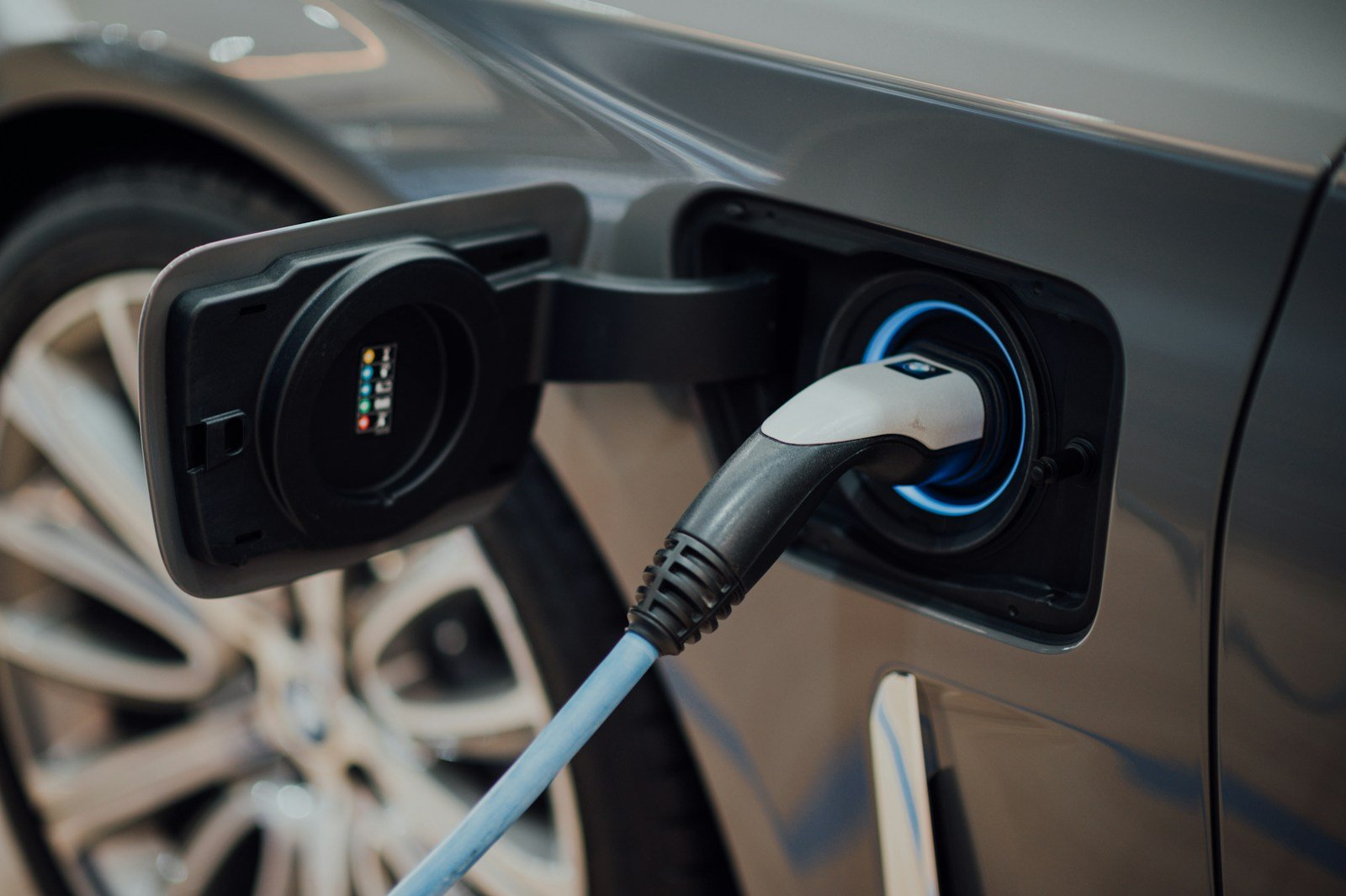
A regular 120-volt outlet (Level 1) adds only about 2 to 5 miles of range per hour, according to the Department of Energy. That can cover a short commute, but not a family SUV doing school runs and weekend trips. A 240-volt Level 2 charger adds about 10 to 30 miles per hour and refills most EVs overnight. The DOE puts Level 2 equipment at roughly $500 to $4,000 before installation.
From the trades: The National Electrical Code treats EV charging as a continuous load, so the circuit has to be sized at 125% of the charger’s draw. In practice, a 48-amp charger needs a 60-amp breaker and a 32-amp charger needs a 40-amp breaker. Before you buy a charger, have a licensed electrician do a load calculation on your panel; many homes with an electric range, dryer and heat pump don’t have room for a 60-amp circuit without an upgrade. A 32-amp charger (about 7.7 kW) still adds roughly 20 to 25 miles per hour to these SUVs, which is plenty for most families overnight. Pull a permit, mount the charger where the cable reaches without crossing a walkway, and if you have a garage, put it on the same side as the car’s charge port.
Each EV: the honest trade-offs
Hyundai Ioniq 9: best overall
The Ioniq 9 combines the longest range among the mainstream three-row EVs (335 miles for the RWD S, 320 for AWD) with the most cargo behind the third row (21.9 cu ft) and a 42.8-inch second row. Edmunds praised its quiet ride, strong value and power-folding third row, and found its real-world range beat the EPA estimate. Downsides: it feels tight with all three rows full, Edmunds found third-row car seat installs tricky, and the infotainment is slow. Seven seats on S, SE and SEL; the Performance trims seat six. Tows up to 5,000 lb on AWD trims.
Kia EV9: best value three-row
The EV9 is the Ioniq 9’s sibling with a boxier body and a lower price. For 2027 it starts at $54,990, and the Light Long Range at $57,990 gets the best range (305 miles) for the money. Edmunds rated its third row roomier than most rivals and confirmed fast charging in testing. The trade-offs: the base Standard Range battery gets just 230 miles, AWD starts at the $64,090 Wind trim, and Light trims feel slow. Third-row legroom ranges from 29.9 to 32 inches depending on second-row seats, so test with your setup.
Tesla Model Y L: best for efficiency and road trips
The stretched Model Y uses the least energy here (30 kWh per 100 miles) and has the simplest road-trip charging. Edmunds liked its heated and ventilated captain’s chairs, vents for both rear rows and a third row adults can handle on short trips. But it’s six seats only, cargo behind the third row is just 14.8 cu ft, the second-row chairs don’t tilt or fold for third-row access, and it hasn’t been crash-tested by IIHS or NHTSA yet. Read our full Tesla Model Y L family review.
Volkswagen ID. Buzz: most space, hardest to buy
The ID. Buzz has minivan space no SUV can match: 42.4 inches of third-row legroom, 75.5 cu ft behind the second row and five full LATCH positions with a Good+ IIHS ease-of-use rating. Cars.com gave it A grades for car seat fit. The catches: EPA range is only 231 to 234 miles, it uses the older CCS port, prices start near $60,000, and VW skipped the 2026 and 2027 model years in the US. It now plans to return as a 2028 model, so for now you’re shopping leftover 2025 inventory. Comparing gas and hybrid vans instead? See our best minivans for families.
Rivian R1S: longest range, adventure-ready
The R1S offers up to 410 miles with the Long Range pack, standard AWD, a big frunk and towing up to 7,700 lb with a weight-distributing hitch. Edmunds called its second-row car seat fit excellent, and it’s a 2026 Top Safety Pick+. But it starts at $83,990, the third row is kids-only and hard to reach, the ride is firm, and there’s no Apple CarPlay or Android Auto.
Volvo EX90: safety-focused luxury
The EX90 earns a Top Safety Pick+ and five NHTSA stars (AWD), with a quiet, premium cabin. It has the smallest cargo area in this group (11.4 cu ft behind the third row), a third row Edmunds called cramped for adults, and an IIHS LATCH rating of Acceptable. Cars.com noted fixed head restraints made forward-facing seats and boosters harder to fit.
Cadillac Vistiq: wait for crash data
The Vistiq is roomy in the second row (40.2 inches), quick and well-built, and Edmunds found car seats fit easily in both rear rows. But it has no IIHS or NHTSA crash ratings yet, cargo behind the third row is 15.2 cu ft with a high load floor, and a recall affects the power-folding third row (see above). We’d wait until crash results are published.
Two-row options: Hyundai Ioniq 5 and Chevrolet Equinox EV
If you have one or two kids, a two-row EV saves $20,000 or more. The Ioniq 5 starts at $35,250, charges from 10% to 80% in about 20 minutes on a fast charger, and earned a 2027 Top Safety Pick (IIHS LATCH rating: Acceptable). The Equinox EV starts at $34,995 with up to 319 miles of EPA range and five NHTSA stars, but IIHS hasn’t rated it, and Recurrent’s data shows it loses more range in the cold than most EVs.
Accessories worth adding
- Level 2 home EV charger: the single biggest upgrade for family EV life; choose the amperage your electrician says your panel can handle.
- Wall-mount charging cable holder: keeps the cable off the garage floor where kids and bikes trip on it.
- Hitch cargo carrier: adds road-trip space behind the car, with less aerodynamic drag than a roof box (which can noticeably cut EV highway range).
- Car seat protector mat: guards upholstery, but only use one if your car seat manual allows it.
- Back-seat organizer: EVs often have small door pockets and no glovebox (the R1S, for one), so this helps.
- Portable tire inflator: many EVs skip the spare tire, and heavy EVs are hard on tires. See our best tire inflators.
- Rear window sun shades: Edmunds noted the Model Y L’s third row gets hot in the sun; shades help in any car with a big glass roof.
FAQ
What is the best electric SUV for a family of 5?
If you don’t need a third row, the Hyundai Ioniq 5 and Chevrolet Equinox EV both start around $35,000 with about 300 miles of range. If you want room to grow or carry friends, the Hyundai Ioniq 9 and Kia EV9 add a usable third row, four full LATCH positions and around 20 cu ft of cargo behind the third row.
Is there an electric minivan?
Yes. The Volkswagen ID. Buzz is the only fully electric minivan sold in the US, but VW has paused new models until the 2028 model year, so only leftover 2025 vans are available. The Chrysler Pacifica Plug-in Hybrid is the alternative if you want sliding doors with some electric driving.
Which three-row electric SUV has the most range?
The Rivian R1S Premium Long Range is EPA-rated up to 410 miles. Among more affordable three-row EVs, the Hyundai Ioniq 9 RWD leads at 335 miles, followed by the Tesla Model Y L at 328 miles.
Can you fit car seats in the third row of an electric SUV?
In the Ioniq 9, EV9, R1S, EX90 and ID. Buzz, yes: each has lower anchors and top tethers in both third-row outboard seats, according to IIHS and Cars.com testing. Expect less legroom for kids in front of the seat, and test third-row access with your second-row seats installed.
Do I need a Level 2 charger for a family EV?
Almost always. A standard outlet adds only 2 to 5 miles of range per hour, while Level 2 adds 10 to 30 miles per hour and refills most family EVs overnight. Have an electrician check your panel before you buy one.
Related guides
- Family Cars hub: seats, car seats and cargo compared
- Tesla Model Y L for Families: Does It Really Fit 6 People?
- Three-Row SUVs With a Third Row Adults Can Actually Use
- SUVs and Minivans That Fit 3 Car Seats Across
- Best Family Cars for Snow: AWD SUVs and Minivans Compared
Sources
EPA range and efficiency: fueleconomy.gov (vehicle IDs 49661, 49662, 49663, 49665–49669, 50862, 48444, 48445, 50666–50676, 50254–50259, 50624, 50625, 50642–50646, 50630, 50841). Crash and LATCH ratings: IIHS Ioniq 9, IIHS EV9, IIHS R1S, IIHS EX90, IIHS ID. Buzz, IIHS Ioniq 5, IIHS 2026 Top Safety Picks (electric), IIHS on heavy EVs; NHTSA 5-Star Safety Ratings. Manufacturer specs: Hyundai Ioniq 9, Kia EV9, Rivian R1S, Volvo EX90, Cadillac Vistiq, Volkswagen ID. Buzz, Hyundai Ioniq 5, Chevrolet Equinox EV. Pricing and model-year news: Cars.com 2027 EV9 pricing, Cars.com Ioniq 9 pricing, Electrek Model Y L launch, KBB Model Y L, Electrek on the ID. Buzz delay, KBB ID. Buzz pricing, GM Authority Vistiq, Not a Tesla App on the Model X. Reviews and car seat checks: Edmunds Ioniq 9, Edmunds EV9, Edmunds Model Y L, Edmunds ID. Buzz, Edmunds R1S, Edmunds EX90, Edmunds Vistiq, Cars.com EV9 Car Seat Check, Cars.com Ioniq 9 Car Seat Check, Cars.com ID. Buzz Car Seat Check, Cars.com R1S Car Seat Check, Cars.com EX90 Car Seat Check, Zecar on Model Y L tethers (Australia), Motor1 on the Vistiq recall. Range in cold weather: Recurrent winter range study, AAA cold-weather study. Charging and costs: DOE Alternative Fuels Data Center, AFDC home charging, EIA electricity prices, EIA gasoline prices, IRS EV credit FAQs. Car seat guidance: NHTSA car seats, AAP HealthyChildren.org, Safe Kids Worldwide. Specs and prices change; confirm with the manufacturer or a dealer. Photos courtesy of Unsplash.