
AmazingBuyz is reader-supported. When you buy through links on our site, we may earn an affiliate commission at no extra cost to you. Learn more.
The best family cars for snow pair all-wheel drive with enough ground clearance to clear an unplowed street, good crash-test results and the winter comforts that make 7 a.m. school runs bearable. For most snowbelt families, the Subaru Ascent is the most complete winter package, the Toyota Grand Highlander Hybrid is the roomiest efficient pick, and the AWD Toyota Sienna is the minivan to get. But no vehicle on this list will stop or steer well on ice without proper winter tires, and that matters more than which badge is on the hood.
Part of our Family Cars guides, where we answer the questions parents actually ask about seats, car seats and cargo.
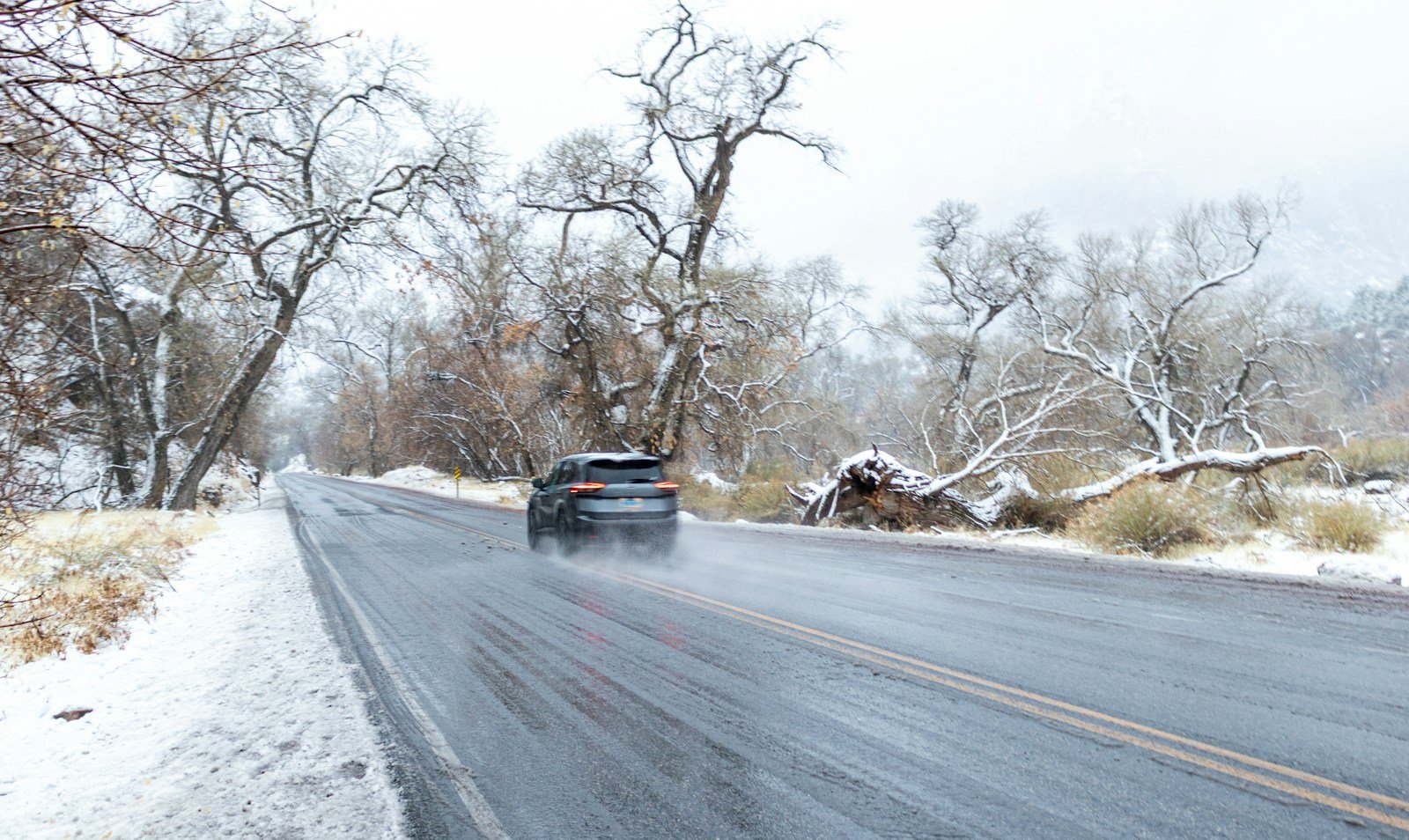
The short answer
- Best all-around for snow: Subaru Ascent. AWD and a heated steering wheel are standard on every trim, it has 8.7 inches of ground clearance, and it’s a 2026 IIHS Top Safety Pick+. The trade-offs are a kid-sized third row and thirsty real-world fuel economy.
- Best for families of four or five: Subaru Forester Hybrid. It has the same 8.7 inches of clearance and standard AWD, earns a 35 mpg EPA rating and is a 2026 Top Safety Pick+, all for far less money.
- Best roomy three-row: Toyota Grand Highlander Hybrid. It has 8.0 inches of clearance, the most adult-friendly third row of the SUVs here and 34 mpg with AWD. However, it has no current IIHS award.
- Best minivan for snow: Toyota Sienna AWD. It gets 35 mpg with AWD, has six car seat positions with LATCH hardware and offers huge cargo space. Ground clearance is only about 6.3 inches, and its IIHS rear-passenger results are weak.
- The rule that beats them all: buy four winter tires with the three-peak mountain snowflake symbol. Consumer Reports’ testing found that tires matter more than AWD in many situations.
Snow-ready family vehicles compared
| Vehicle (model year) | Cheapest AWD price* | Seats | Cargo behind 3rd / 2nd / 1st row (cu ft) | 3rd-row legroom | AWD | Ground clearance | EPA combined mpg (AWD) | Car seat anchors (IIHS) | IIHS LATCH rating | IIHS award | NHTSA overall |
|---|---|---|---|---|---|---|---|---|---|---|---|
| Subaru Ascent (2027) | $40,795 | 7–8 | 17.8 / 43.5 / 75.6 | 31.7 in | Standard | 8.7 in | 21–22 | 3 full LATCH + 1 borrowing; 6 tethers | Good+ | 2026 Top Safety Pick+ | 5 stars |
| Subaru Forester / Hybrid (2027) | $29,995 (Premium $31,995; Hybrid $34,730) | 5 | n/a / 33.1–35.4 / 64.1–68.6 | n/a | Standard | 8.7 in (9.3 Wilderness) | 29 gas / 35 hybrid** | 2 full LATCH + 1 borrowing; 3 tethers | Good+ | 2026 Top Safety Pick+ | 5 stars |
| Toyota Grand Highlander (2027) | About $44,160 gas; $45,910 Hybrid | 7–8 | 20.6 / 57.9 / 97.5 | 33.5 in | Optional | 8.0 in | 22–23 gas / 34 hybrid** | 3 full LATCH + 2 tether positions | Good | None (2025 or 2026) | 5 stars |
| Honda Pilot (2026) | $44,495 | 7–8 | 18.6 / 48.5 / 86.5 | 32.5 in | Optional (standard TrailSport and up) | 7.3 in (8.3 TrailSport) | 20–21 | 4 full LATCH + 2 tether-only | Good+ | 2025 Top Safety Pick | 5 stars |
| Kia Telluride (2027) | $44,090 gas; $48,490 Hybrid | 7–8 | 22.3 / 46.3–48.7 / 86.9–89.3 | About 32.1 in | Optional | 7.4 in (9.1 X-Pro) | 19–20 gas / 31 hybrid | 4 full LATCH + 1 tether-only | Good+ | 2026 Top Safety Pick+ (built after June 2026) | Not yet rated |
| Toyota Sienna AWD (2026) | $42,120 | 7–8 | 33.5 / 75.2 / 101.0 | 38.7 in | Optional | About 6.3–6.4 in | 35 | 5 full LATCH + 1 borrowing | Good+ | None | 5 stars |
| Chrysler Pacifica AWD (2027) | $46,540 | 7–8 | 32.3 / 87.5 / 140.5 | 36.5 in | Optional | 5.4 in | 20 | 3 full LATCH + 1 borrowing | Acceptable | None | 5 stars |
*Manufacturer MSRP before destination fees of $1,495 to $1,995. **2026 EPA ratings for the same powertrain; 2027 ratings were not yet posted. “Borrowing” means a seat that has its own tether and one lower anchor and borrows the second lower anchor from the next seat. Check the vehicle manual and your car seat manual before using a borrowed anchor. Sources: manufacturer press releases and spec sheets, fueleconomy.gov, IIHS and NHTSA, compiled October 2026. Where sources disagreed, we show a range.
What actually matters in snow (it’s not just AWD)
Tires come first. Consumer Reports found an AWD Honda CR-V on all-season tires took almost 700 feet to stop from 60 mph in snow. On a different test day, a front-drive Camry and the same CR-V on winter tires each stopped in about 300 feet. The conditions weren’t identical, but CR’s conclusion was blunt: winter tires matter more than AWD in many situations. Quebec has required winter tires since 2008. In the first winter of that rule, fatal and serious-injury crashes fell 33% compared with the previous five-year average. The province’s earlier testing found winter tires shortened braking distances by about 25% on average.
AWD gets you moving. It doesn’t stop you. AWD sends power to the wheels that have grip, so it helps you pull away from a snowy curb or climb an icy driveway. It does nothing for braking and little for steering. Every car on this list stops with four tire contact patches, so the rubber decides the outcome.
Know your tire symbols. “M+S” (mud and snow) describes tread shape and guarantees no performance. The three-peak mountain snowflake (3PMSF) symbol means the tire passed a standardized snow-traction test. Dedicated winter tires still outperform “all-weather” tires that carry the symbol, especially on ice. The Canadian Automobile Association notes that all-season rubber starts to harden at around 7°C (45°F).
Ground clearance decides whether you plow or float. If your street gets 8 inches overnight and the plow comes at noon, the Subarus (8.7 inches) and the Grand Highlander (8.0) will ride over snow that a Pacifica (5.4 inches) will push. The Sienna sits in between at about 6.3 inches. That’s fine on plowed roads but limiting in deep, unplowed snow.
Winter comfort features are worth paying for. A heated steering wheel, heated second-row seats, a windshield wiper de-icer and remote start all matter on cold mornings, and they’re spread unevenly across trims. We list them for each vehicle below.
Car seats in winter: anchors, access and coats
Snow season makes car seat installation harder, because you’re kneeling on a cold, wet floor with gloves off. Vehicles with more full LATCH positions and anchors that are easy to reach give you more flexibility.
- Most anchor positions: the Sienna has five seats with full LATCH hardware plus one borrowing position, and IIHS rates its LATCH ease of use Good+. The Pilot and Telluride each have four full LATCH positions.
- Three-row access with seats installed: J.D. Power reports the new Telluride’s captain’s chairs tip forward with a car seat still installed. Edmunds says the Grand Highlander’s captain’s chairs slide far enough to fit a large rear-facing seat, and its third-row anchors are easy to reach.
- Weaker spot: the Pacifica’s LATCH hardware is rated only Acceptable by IIHS. In the Telluride, IIHS flagged two sets of lower anchors as set too deep in the seat.
- Layouts to try: with two kids, put a rear-facing seat behind the front passenger and a forward-facing seat behind the driver in the second row. With three, try one seat in the third row on a LATCH position so an older child can walk through to the back.
The winter coat rule. The American Academy of Pediatrics says bulky coats and snowsuits should not be worn under a car seat harness, because the padding flattens in a crash and leaves the straps too loose. Dress kids in thin fleece layers, buckle them in, then lay the coat or a blanket over the harness. Do the pinch test: if you can pinch any harness webbing at the shoulder, tighten it. Our baby snowsuit guide covers what to wear outside the car.
We compiled manufacturer specs, EPA, IIHS and NHTSA data and expert reviews for this guide. We did not install car seats in these vehicles. Bring your own seats to a test drive, and have the installation checked by a certified Child Passenger Safety Technician (CPST) through Safe Kids Worldwide.

Cargo: strollers, sleds and snow gear
Winter adds bulk: snow boots, a sled, a shovel and an emergency kit. Behind the third row, the minivans win by a mile: the Sienna has 33.5 cubic feet and the Pacifica has 32.3. Among the three-row SUVs, the Telluride (22.3) and Grand Highlander (20.6) lead, with the Pilot (18.6) and Ascent (17.8) behind. A full-size stroller fits behind the third row of the minivans with room left over. In the SUVs, a compact fold is the safer bet. See our best travel strollers for small folds and best strollers for full-size picks. The two-row Forester has 33.1 to 35.4 cubic feet behind its back seat, more than any of the SUVs offer behind their third rows.
Safety data in plain words
NHTSA stars measure how the vehicle protects occupants in frontal, side and rollover tests. Every vehicle here that has been rated earned five stars overall. The 2027 Telluride hasn’t been rated yet.
IIHS awards are harder to earn. Since 2025, IIHS has required good protection for a back-seat passenger in its updated front crash test, and that’s where several family favorites stumble. The Sienna and Pacifica are rated Marginal in that test, with the Sienna’s rear-passenger restraints rated Poor. IIHS reported that no minivan qualified for an award in 2025. The Pilot is Acceptable, with rear-passenger restraints rated Marginal. The Ascent, Forester, Grand Highlander and Telluride are rated Good. The Grand Highlander missed an award because of an Acceptable driver-side small overlap result.
Headlights matter more in winter, when school pickups happen after dark. The Ascent and Forester have Good-rated headlights on every trim. The Grand Highlander’s are Acceptable. Telluride models built before June 2026 have Marginal headlights, and only later builds qualify for the Top Safety Pick+. Ask the dealer for the build date.
Fuel cost math
The formula is simple: gallons per year = miles driven ÷ mpg. Multiply by your local gas price. Assuming 12,000 miles a year and $3.50 a gallon (plug in your own numbers):
- Forester Hybrid or Sienna AWD (35 mpg): 12,000 ÷ 35 = about 343 gallons, roughly $1,200
- Grand Highlander Hybrid AWD (34 mpg): about 353 gallons, roughly $1,235
- Telluride Hybrid AWD (31 mpg): about 387 gallons, roughly $1,355
- Subaru Ascent (22 mpg): about 545 gallons, roughly $1,910
- Pacifica AWD or gas Telluride AWD (20 mpg): 600 gallons, roughly $2,100
Cold weather lowers everyone’s mpg, and real-world results can trail EPA figures. Edmunds averaged only 16.7 mpg in its Ascent test car, which would mean about 719 gallons a year. Edmunds’ long-term AWD Sienna, by contrast, averaged 32.9 mpg over nearly 20,000 miles.
From the trades: If you’re weighing an EV for a snowy climate, plan for winter range loss. AAA found range dropped 41% at 20°F with the heater running. Recurrent’s 2025 study of more than 30,000 EVs found they kept about 70% of their range at 20°F on average, and that heat pumps help. Plug in overnight and precondition the cabin while still on the charger. A Level 2 home charger needs a dedicated 240-volt circuit, so get a licensed electrician to confirm your panel’s capacity before you order. For gas vehicles in very cold regions, Natural Resources Canada says an engine block heater on a timer, switched on about two hours before you drive, is enough. It found fuel savings of up to 10% at -20°C.
The vehicles, one by one
Subaru Ascent: the most complete winter package
Symmetrical AWD, X-Mode with hill descent control, 8.7 inches of ground clearance, Good-rated LED steering-responsive headlights and a heated steering wheel come standard on every trim from the $40,795 Premium up. Limited and above add Snow/Dirt and Deep Snow/Mud modes and heated second-row seats. Kelley Blue Book calls it great in snow. It’s a 2026 IIHS Top Safety Pick+ with Good+ LATCH and six tether anchors across the back two rows.
Trade-offs: the 31.7-inch third row is for kids, and cargo behind it (17.8 cubic feet) is the smallest here. Edmunds found the second-row seats uncomfortable and real-world mpg poor. Heated rear seats mean stepping up to the Limited, which costs about $7,200 more.
Subaru Forester and Forester Hybrid: best value for smaller families
If you need five seats, not seven, the Forester gives you the Ascent’s 8.7 inches of clearance and standard AWD for much less. The Wilderness trims raise clearance to 9.3 inches and add all-terrain tires. Skip the $29,995 Base trim for winter, because it lacks heated seats and X-Mode. The Premium’s All-Weather Package brings heated front seats, heated mirrors and a wiper de-icer, and every Hybrid includes it. The Hybrid’s 35 mpg rating and quicker acceleration make it the one Edmunds recommends. It’s a 2026 Top Safety Pick+, with Good results for the rear passenger on every measure.
Trade-offs: the gas version is slow (Edmunds measured 0 to 60 mph in 9.2 seconds) and rides firmly. Three car seats across means using the middle seat’s borrowed anchors or a seat-belt install, so test before you buy.
Toyota Grand Highlander: the roomiest efficient SUV
The Grand Highlander offers 33.5 inches of third-row legroom, the most of the SUVs here, plus 20.6 cubic feet behind the third row and 8.0 inches of clearance. The Hybrid’s 34 mpg with AWD is outstanding for a vehicle this size. AWD models get a Snow mode, and for 2027 a heated steering wheel is standard from the XLE up. A new Hybrid Woodland Edition adds all-terrain tires and an extra half-inch of clearance. KBB calls the AWD sure-footed in cold weather.
Trade-offs: no IIHS award, Acceptable headlights, and Edmunds noted more road noise than rivals, sluggish acceleration and two open recalls on 2026 models. Check any vehicle’s VIN on NHTSA’s recall lookup.
Honda Pilot: the best car seat flexibility
The Pilot has four full LATCH positions plus two tether-only seats, Good+ LATCH ease of use, and torque-vectoring AWD that can send up to 70% of torque to the rear axle. A Snow mode and key-fob remote start are standard on every trim. EX-L and up have a removable second-row middle seat, which turns it into a walk-through to the third row.
Trade-offs: clearance is 7.3 inches unless you buy the TrailSport (8.3), and there’s no hybrid, so you’ll get 20–21 mpg. Its IIHS award is from 2025, and rear-passenger protection in the updated front test is a weak spot. The heated steering wheel is limited to the TrailSport, Elite and Black Edition.
Kia Telluride: new, roomy and strong on paper
The redesigned 2027 Telluride has the most cargo behind the third row of the SUVs here (22.3 cubic feet). It also offers a 31 mpg AWD hybrid and earns a 2026 Top Safety Pick+ for later builds. The X-Pro adds 9.1 inches of clearance, an electronic limited-slip differential and Snow/Mud/Sand modes. Remote start is standard.
Trade-offs: NHTSA hasn’t rated it yet, early builds have Marginal headlights, and the heated steering wheel is limited to upper trims. The X-Pro is gas-only, rated 19 mpg. Cargo-volume figures vary by source, and we didn’t find any published snow test.
Toyota Sienna AWD: the snowbelt minivan
Every Sienna is a hybrid, and AWD costs $2,000 more while barely denting fuel economy (35 mpg combined). Edmunds says more than half of buyers choose AWD. It has five full LATCH positions, a 38.7-inch third row adults can use, and 33.5 cubic feet behind it. A wiper de-icer is standard for 2026.
Trade-offs: clearance is only about 6.3 inches, the heated steering wheel is limited to the Platinum, and IIHS rates its rear-passenger protection poorly. A 2027 model is due soon, so watch for updates.
Chrysler Pacifica AWD: the most cargo and Stow ‘n Go
The 2027 Pacifica is the only minivan pairing AWD with fold-into-the-floor second-row Stow ‘n Go seats (Select and Limited). It has huge cargo space, and heated front seats and a heated steering wheel are standard. Reviewers praise its smooth V6 and a third row adults can use.
Trade-offs: 5.4 inches of clearance is the lowest here, so it’s a plowed-roads vehicle. It gets 20 mpg with AWD, no hybrid is offered for 2027, its IIHS LATCH rating is Acceptable, and its updated front-test rating is Marginal.
Weighing a minivan against an SUV? Our minivan comparison goes deeper on the Sienna and Pacifica. For an EV with AWD, see our Tesla Model Y L family review.
Winter accessories worth adding
- Winter tires with the 3PMSF symbol: the single biggest upgrade for stopping and steering on snow and ice. Buy a full set of four.
- Extendable snow brush and ice scraper: lets you clear the roof of a tall SUV or minivan, which some states require.
- Winter car emergency kit: NHTSA recommends a shovel, traction sand or kitty litter, jumper cables, a flashlight, warning devices, blankets and first aid.
- Portable jump starter: cold batteries fail, and you don’t need a second car. See our jump starter guide.
- Portable tire inflator: tire pressure drops as temperatures fall. Our tire inflator picks compare options.
- All-weather floor liners: they trap slush and salt from small boots before it soaks the carpet.
- Thin kids’ fleece jackets: warm enough under a harness without the slack a puffy coat creates.
FAQ
Is AWD or winter tires more important for driving in snow?
Winter tires. AWD helps you accelerate on slippery roads, but it doesn’t help you brake, and it helps little with turning. Consumer Reports concluded that winter tires matter more than AWD in many situations. The ideal is both.
What is a good ground clearance for snow?
Around 8 inches or more lets you drive through deeper unplowed snow without the vehicle’s underside pushing it. The Subaru Ascent and Forester (8.7 inches) and the Toyota Grand Highlander (8.0) qualify. Most minivans sit between about 5 and 6.5 inches, which is fine on plowed roads.
Are AWD minivans good in snow?
Yes, on plowed and lightly covered roads, especially with winter tires. The Toyota Sienna and Chrysler Pacifica both offer AWD. Their lower ground clearance makes deep, unplowed snow harder than it is in a high-riding SUV.
Can my child wear a winter coat in a car seat?
Not a bulky one. The AAP and NHTSA advise thin layers under the harness, with the coat or a blanket placed over the buckled straps. Use the pinch test at the shoulder: if you can pinch the webbing, the harness is too loose.
Do electric SUVs work well for families in snowy climates?
They can. Many have AWD and a low center of gravity, but plan for cold-weather range loss. Recurrent’s data shows EVs average about 70% of their normal range at 20°F. Charge at home and precondition the cabin while plugged in.
Related guides
- Family Cars guides hub
- Best Minivans for Families: Sienna vs Odyssey vs Pacifica vs Carnival
- Tesla Model Y L for Families: Does It Really Fit 6 People?
- The Best Convertible Car Seats
- Winter Storm and Power Outage Prep
- Winter Car Emergency Kit: What to Pack and How to Drive in Snow
Sources
Subaru: 2027 Ascent pricing, 2027 Ascent press kit, 2027 Forester pricing, 2026 IIHS awards release. Honda: 2026 Pilot pricing and EPA, 2026 Pilot specifications. Toyota: Grand Highlander Woodland Edition, Cars.com 2027 Grand Highlander pricing, CarScoops 2026 Sienna pricing. Kia: 2027 Telluride pricing (AutoGuide), 2027 Telluride specs, J.D. Power Telluride review. Chrysler: 2027 Pacifica pricing, 2027 Pacifica AWD and features. Safety and efficiency: IIHS ratings, IIHS 2025 award criteria, IIHS on the Grand Highlander, IIHS on the 2027 Telluride, NHTSA 5-Star Safety Ratings, EPA fueleconomy.gov. Reviews: KBB Ascent, Edmunds Ascent, Edmunds Forester, Edmunds Grand Highlander, KBB Grand Highlander, Edmunds Sienna, The Drive Pilot, AutoGuide Pacifica. Winter driving: Consumer Reports on AWD and winter tires, Quebec winter tire study (TAC), CAA winter tires, Tire Rack on the 3PMSF symbol, NHTSA winter driving tips, AAP winter car seat safety, AAA cold-weather EV range, Recurrent winter EV range study, Natural Resources Canada on block heaters, Safe Kids Worldwide car seat checks. Specs and prices change; confirm with the manufacturer or a dealer. Photos courtesy of Unsplash.