
AmazingBuyz is reader-supported. When you buy through links on our site, we may earn an affiliate commission at no extra cost to you. Learn more.
The best portable solar panels turn a power station into a true off-grid system, letting you recharge during a multi-day winter outage or keep the fridge and lights running at a remote campsite. The right panel depends on your power station’s solar input limit, its connector and how much weight you’re willing to carry. We compared specs, expert testing and owner reviews of current folding panels from Jackery, EcoFlow, Anker SOLIX, Bluetti, ALLPOWERS and Goal Zero to pick 10 for every setup and budget.
Part of our Home Comfort, Backup Power & Tool Guides.
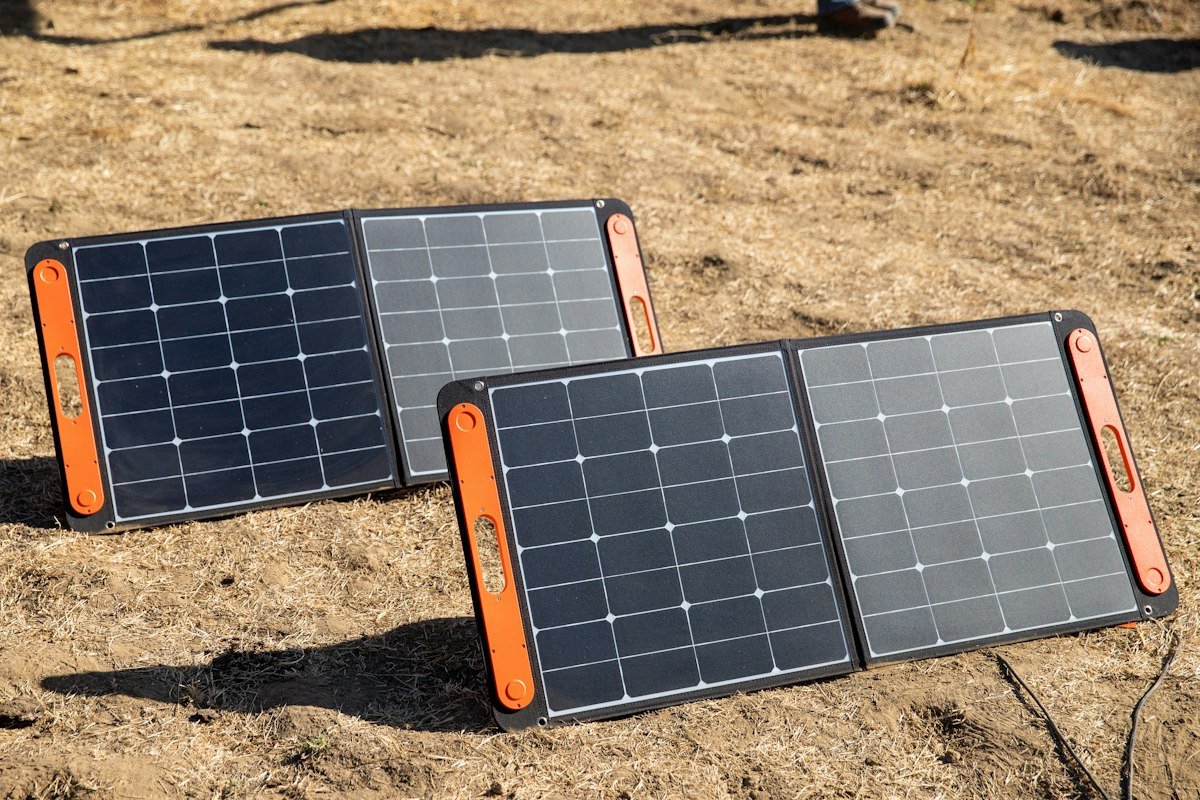
Quick picks
| Product | Best for | Price range | |
|---|---|---|---|
| Jackery SolarSaga 200W | Best overall | $$-$$$ | See price |
| EcoFlow NextGen 220W Bifacial Portable Solar Panel | Bifacial output, EcoFlow owners | $$-$$$ | See price |
| Anker SOLIX PS400 Portable Solar Panel | Fastest charging for big stations | $$$-$$$$ | See price |
| Bluetti PV350 Solar Panel | High output, premium build | $$$-$$$$ | See price |
| Bluetti PV200 Solar Panel | Best value 200W | $$-$$$ | See price |
| Bluetti PV120 Solar Panel | Best 100W-class panel | $$ | See price |
| Jackery SolarSaga 100W | Lightweight Jackery companion | $$ | See price |
| EcoFlow 110W Portable Solar Panel | Backpack-friendly budget | $$ | See price |
| ALLPOWERS SP033 200W Portable Solar Panel | Lowest-cost 200W | $-$$ | See price |
| Goal Zero Boulder 200 Briefcase | Rugged, permanent-style panel | $$$ | See price |
Price tiers: $ = under $200, $$ = $200 to $400, $$$ = $400 to $700, $$$$ = over $700. Solar panels are frequently bundled with power stations and discounted around Black Friday, so compare the bundle price against buying separately.
1. Jackery SolarSaga 200W: Best Overall
Jackery’s SolarSaga 200W is the panel we’d pair with most mid-size power stations. In Outdoor Life’s sun-and-cloud testing it delivered about 92% of its rating in full sun and posted the best cloudy-day result of the group, and CNET called it its favorite portable panel for its strong watts-per-pound. The current version uses TOPCon monocrystalline cells in a bifacial design that Jackery rates at about 25% conversion efficiency, and it carries an IP68 dust and water rating. It works with every Jackery Explorer station and, with the right adapter, many others.
Key specs
- 200W rated output
- TOPCon monocrystalline, bifacial cells
- About 25% rated efficiency
- IP68 dust and water resistance
- DC8020 output with DC7909 adapter included
- 3-year warranty (extended when bought direct)
👍 Pros
|
👎 Cons
|
What owners say: Owners like how quickly it folds up and how close it gets to its rating on clear days; the price is the most common complaint.
2. EcoFlow NextGen 220W Bifacial Portable Solar Panel: Best Bifacial Panel
EcoFlow’s 220W panel collects light on both faces: the front is rated at 220W and the rear at 175W, so light reflected off sand, snow or a pale tarp adds output. The NextGen version has a 25% rated efficiency, an IP68 rating and an integrated stand that adjusts from 30 to 60 degrees. Outdoor Life measured close to 90% of the front rating in full sun, though both it and Popular Science found the earlier stand a little wobbly.
Key specs
- 220W front / 175W rear
- 25% rated efficiency
- About 15.4 lb
- Folded: 24.2 x 23.2 x 1.3 in
- IP68
- XT60i cable included, 30 to 60-degree stand
👍 Pros
|
👎 Cons
|
What owners say: Owners like the extra output on bright, reflective ground; some wish the stand were sturdier.
3. Anker SOLIX PS400 Portable Solar Panel: Best 400W Panel
If you own a large station like an Anker SOLIX F2000 or F3800, a 400W panel cuts recharge time dramatically. Outdoor Life named Anker’s 400W panel its best-value 400W pick: it measured about 330W in full sun and was relatively easy to set up thanks to adjustable legs. It’s big and heavy at roughly 35 pounds, so it’s better suited to RV, cabin and backyard backup use than to carrying long distances.
Key specs
- 400W rated output
- About 35 lb
- IP67 water resistance
- XT-60 output
- Adjustable kickstand legs
- 2-year warranty
👍 Pros
|
👎 Cons
|
What owners say: Owners say it refills big batteries noticeably faster than 200W panels; the weight and bulk are the trade-offs.
4. Bluetti PV350 Solar Panel: Best High-Output Splurge
Popular Science named the Bluetti PV350 its splurge pick for its 350W rating, 23.4% efficiency and premium feel, and CNET singled it out for fast charging. At around 30 pounds it’s surprisingly light for its output, which makes it a good match for Bluetti’s AC180, AC200 and larger stations. Check the voltage against your station’s solar input limit before buying.
Key specs
- 350W rated output
- 23.4% rated efficiency
- About 30.6 lb
- Folding design with kickstand
👍 Pros
|
👎 Cons
|
What owners say: Owners praise how fast it tops up larger power stations; storage space and price are the usual complaints.
5. Bluetti PV200 Solar Panel: Best Value 200W
Outdoor Life’s best-value 200W pick, the Bluetti PV200 produced about 89% of its rating in full sun and held up well in clouds. Its MC4 connectors are the industry standard, so it’s easy to pair with stations from other brands using inexpensive adapter cables, and the adjustable legs make aiming it at the sun simple. CNET noted it costs less per watt than Jackery’s 200W panel.
Key specs
- 200W rated output
- 23.4% rated efficiency
- MC4 output
- IP65 water resistance
- Adjustable legs
👍 Pros
|
👎 Cons
|
What owners say: Owners call it a lot of panel for the money and like the mix-and-match connector; a few find it bulky when folded.
6. Bluetti PV120 Solar Panel: Best 100W-Class Panel
Outdoor Life’s top 100W-class panel, the PV120 delivered roughly 110W in full sun, more than any other panel in its price range, and packs up securely for carrying. At about 13 pounds it’s an easy grab-and-go option for small and mid-size power stations, tailgates and weekend camping.
Key specs
- 120W rated output
- About 13 lb
- IP65 water resistance
- DC output, about 20V
👍 Pros
|
👎 Cons
|
What owners say: Owners like its real-world output and compact fold; most wish the warranty were longer.
7. Jackery SolarSaga 100W: Best Lightweight Panel
Popular Science called Jackery’s 100W panel its best-rated pick for all-around performance and durability, and at about 7 pounds it’s light enough to toss in a trunk with an Explorer 300 or 500. Like all 100W panels, it’s slow on its own for big stations, but two can be paired for faster charging.
Key specs
- 100W rated output
- About 23% rated efficiency
- About 7.1 lb
- Works with Jackery Explorer stations
👍 Pros
|
👎 Cons
|
What owners say: Owners like how portable and sturdy it is; many end up buying a second panel for faster charging.
8. EcoFlow 110W Portable Solar Panel: Best Compact Panel
Popular Science’s budget pick, EcoFlow’s 110W panel weighs under 9 pounds, folds to fit in a medium backpack and uses snap buttons to stay closed. Outdoor Life measured about 104W in full sun, close to its rating. Its kickstand case is a bit fussy to set up, but it’s an easy add-on for EcoFlow River and smaller Delta stations.
Key specs
- 110W rated output
- About 23% rated efficiency
- About 8.8 lb
- IP68 water resistance
- MC4 output
👍 Pros
|
👎 Cons
|
What owners say: Owners like how easy it is to carry; some report the case-stand takes practice.
9. ALLPOWERS SP033 200W Portable Solar Panel: Best Budget 200W
ALLPOWERS sells one of the least expensive 200W folding panels, and it pairs naturally with ALLPOWERS R-series power stations. It ships with several connector adapters so it can charge many popular portable power stations. It doesn’t have the expert test record of Jackery or Bluetti, but it’s a reasonable way to add solar on a tight budget.
Key specs
- 200W rated output
- Foldable design
- Multiple connector adapters included
- Works with ALLPOWERS stations and many others
👍 Pros
|
👎 Cons
|
What owners say: Owners mostly praise the value and compatibility; some see real-world output well below the rating in less-than-ideal sun.
10. Goal Zero Boulder 200 Briefcase: Most Durable
Popular Science named the rigid, suitcase-style Boulder 200 its best overall for durability and performance in imperfect sun: the reviewer’s unit survived repeated drops and bumps. The trade-off is weight. At more than 40 pounds it’s best for basecamps, overlanding rigs and backyard backup rather than carrying by hand, and it pairs best with Goal Zero Yeti stations.
Key specs
- 200W rated output
- 21% rated efficiency
- About 46 lb
- Rigid briefcase-style design
- HPP output
👍 Pros
|
👎 Cons
|
What owners say: Owners trust its toughness for years of use; nearly everyone mentions how heavy it is.
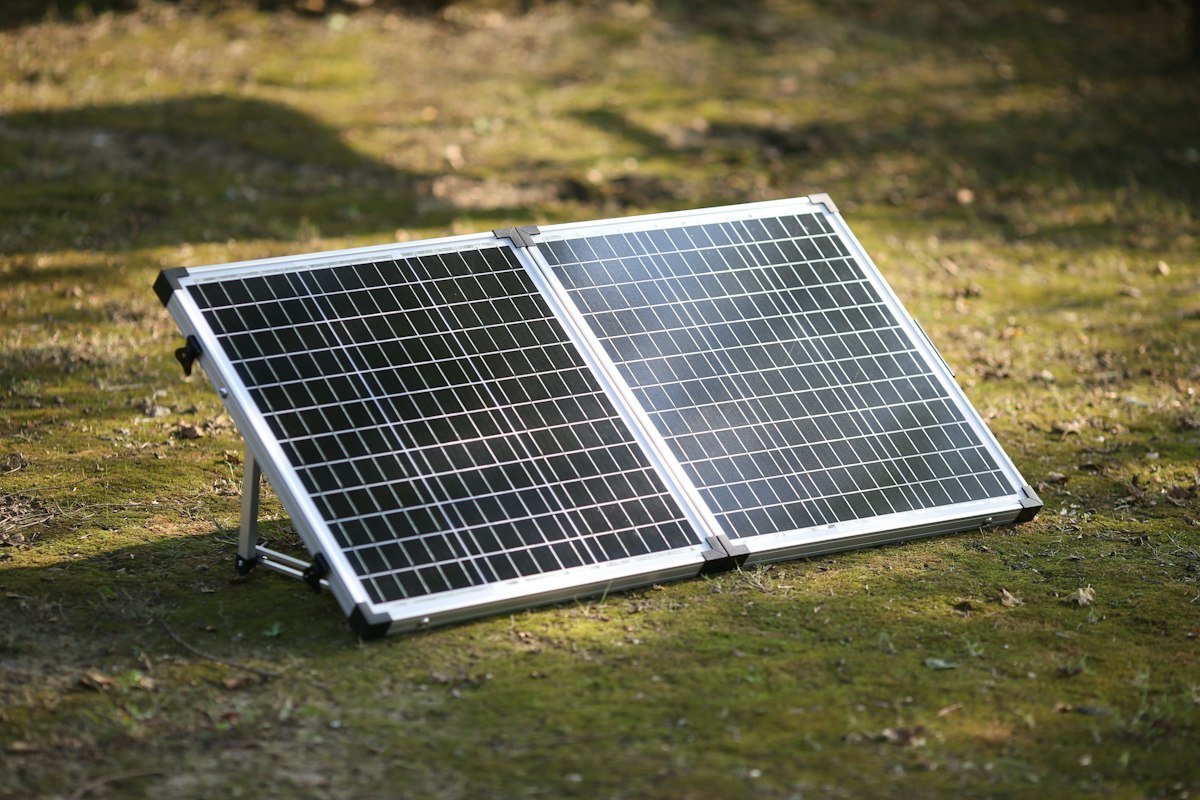
How to choose the best portable solar panel
- Match your power station’s solar input: Every station lists a maximum solar wattage and voltage range, often in small print on the bottom. Stay within both. Exceeding the voltage limit can damage the station, and extra wattage beyond the limit is simply wasted.
- Check the connector: Jackery uses DC8020, EcoFlow and Anker use XT-60, Goal Zero uses HPP and many panels use MC4. Adapters exist, but buying a panel with the right plug saves hassle.
- Pick wattage by recharge time: A 1,000Wh station takes roughly five to seven hours of good sun with a 200W panel. Two panels or a 400W panel cut that time, if your station’s input allows it.
- Weigh portability: 100W panels weigh 7 to 13 pounds and fit a backpack; 400W panels can reach 35 pounds. Choose the largest panel you’ll actually carry and set up.
- Look at efficiency and bifacial designs: Higher efficiency (23% to 25%) means more watts per square foot. Bifacial panels add output from reflected light on snow, sand or light-colored ground.
- Durability and warranty: Look for IP65 or better water resistance and a warranty of at least two years. Jackery’s is among the longest.
Not sure how big a station or how many panels you need? Try our power station and generator sizing calculator, then size your solar so you can refill that battery in a day of sun.
FAQ
How long does it take to charge a power station with a solar panel?
Divide the station’s capacity by the panel’s real-world output. Panels typically make 75% to 90% of their rating in strong, direct sun, so a 200W panel producing about 170W refills a 1,000Wh station in roughly six hours. Clouds, short winter days and poor angles can cut output dramatically.
Can I connect two solar panels to one power station?
Yes, many stations accept panels in series or parallel using branch or Y-cables. Check the manufacturer’s maximum input voltage and wattage first; series wiring adds voltage and can exceed the limit.
Do portable solar panels work on cloudy days?
They work, but output drops sharply. In Outdoor Life’s testing, panels produced roughly 20% to 25% of their rating under clouds.
Can I use a different brand of solar panel with my power station?
Usually, as long as the voltage and wattage fall within your station’s solar input range and you use the right adapter cable. Follow your station manufacturer’s limits to avoid voiding the warranty.
Is a 400W portable solar panel worth it?
It is if you have a large power station and want to refill it in a single sunny day. Our best 400W pick, the Anker SOLIX PS400, measured about 330W in full sun in Outdoor Life’s testing; at that rate, a 1,000Wh station refills in roughly three hours of strong sun, about half the time a 200W panel needs. The trade-offs are size and compatibility: it weighs about 35 pounds, and its higher voltage means some smaller stations can’t accept it. Before buying, confirm that your station’s solar input allows at least 400W and that the panel’s voltage falls inside its input range. If you carry gear any distance, two lighter 200W panels can be easier to manage, as long as the combined voltage and wattage stay within your station’s limits.
Related guides
- The Best Solar Generators of 2026
- The Best Portable Power Stations for Home Backup of 2026
- The Best Power Stations for RV Camping of 2026
- Home Comfort, Backup Power & Tool Guides
Sources
Outdoor Life: Best portable solar panels; Popular Science: Best portable solar panels; CNET: Best portable solar panels; Jackery: SolarSaga 200W specifications; EcoFlow NextGen 220W specifications. Owner feedback is summarized in our own words from public reviews. Photos courtesy of Unsplash.