
AmazingBuyz is reader-supported. When you buy through links on our site, we may earn an affiliate commission at no extra cost to you. Learn more.
The best mattress for back pain keeps your spine in a neutral line all night: firm enough under the hips and lower back that you don’t sag, but with enough cushioning at the shoulders that you aren’t pushed out of alignment. That balance looks different for side, back and stomach sleepers, so we compared specs, expert testing and owner reviews to pick nine mattresses with zoned support, strong edges and sensible firmness options, from a budget all-foam bed to luxury zoned hybrids. A mattress is not a medical treatment, so if you have ongoing pain, talk with your doctor or a physical therapist.
Part of our Mattress & Sleep Buying Guides.
Quick picks
| Mattress | Best for | Price range (queen) | |
|---|---|---|---|
| Helix Midnight Luxe | Best Overall (Side Sleepers) | $$$ | See price |
| WinkBed | Best Zoned Hybrid for Back and Hip Pain | $$$ | See price |
| WinkBed Plus | Best for Heavier Sleepers | $$$ | See price |
| DreamCloud Hybrid | Best Value Hybrid | $$ | See price |
| Nectar Premier Memory Foam | Best Memory Foam | $$ | See price |
| Bear Elite Hybrid | Best Cooling | $$$ | See price |
| Plank Firm Luxe | Best Firm (Back and Stomach Sleepers) | $$$ | See price |
| Cocoon by Sealy Chill | Best Cooling Foam on a Budget | $–$$ | See price |
| Siena 10″ Signature | Best Budget | $ | See price |
Price ranges (queen size): $ under $500 · $$ $500–$1,000 · $$$ $1,000–$2,000 · $$$$ $2,000+. Mattress brands run sales almost constantly, so check the current price.
1. Helix Midnight Luxe: Best Overall (Side Sleepers)
Side sleepers with back pain need two things that often conflict: soft cushioning at the shoulder and hip, and firm support at the waist so the spine doesn’t sag. The Midnight Luxe handles both with a pillow top over zoned pocketed coils that are firmer under the lumbar area. Tom’s Guide gave it top marks for support and pressure relief and named it its pick for side sleepers with back pain. It is too soft for most stomach sleepers.
Key specs
- Type: hybrid with pillow top
- Firmness: medium (about 5–6 out of 10)
- Height: 13.5 inches
- Support: up to 1,000 individually wrapped coils with zoned lumbar support; optional ErgoAlign layer
- Trial and warranty: 120 nights, limited lifetime
👍 Pros
|
👎 Cons
|
What owners say: Side sleepers often say they wake up with less shoulder and hip stiffness after switching. A few heavier back sleepers wish it were firmer in the middle.
2. WinkBed: Best Zoned Hybrid for Back and Hip Pain
The WinkBed is built around back support, with zoned pocketed coils, gel-infused foam and a dedicated lumbar layer. It comes in four firmness options, so back, side and combination sleepers can each choose a feel that fits. Tom’s Guide’s testers rated it highly for pressure relief, motion isolation and edge support, and the Luxury Firm version tested firmer than its label, which many back sleepers will like.
Key specs
- Type: hybrid
- Firmness: Softer, Luxury Firm, Firmer or Plus
- Height: 13.5 inches
- Support: zoned pocketed coils, lumbar layer
- Trial and warranty: 120 nights, lifetime
👍 Pros
|
👎 Cons
|
What owners say: Owners praise the sturdy, hotel-like feel and the lower-back support. Some say the Luxury Firm is firmer than they expected.
3. WinkBed Plus: Best for Heavier Sleepers
Heavier bodies sink deeper and compress foams faster, which can lead to sagging and poor spinal alignment. The WinkBed Plus is designed for sleepers 250 lb and up, with banded, reinforced coils and a 2.5-inch latex layer for a responsive, lifted feel. TechRadar named it the best mattress for back pain for bigger bodies, noting it feels firm for lighter people but closer to medium for sleepers around 300 lb.
Key specs
- Type: hybrid with latex
- Firmness: firm for sleepers under 200 lb, closer to medium for 300 lb+
- Height: 13.5 inches
- Support: reinforced, banded pocketed coils; 2.5-inch latex layer
- Trial and warranty: 120 nights, lifetime
👍 Pros
|
👎 Cons
|
What owners say: Larger sleepers say it finally stopped the hammock feeling they had on older beds. Lighter partners sometimes find it too firm.
4. DreamCloud Hybrid: Best Value Hybrid
The DreamCloud Hybrid delivers a traditional, bouncy innerspring feel with even support from head to toe, and it costs far less than most luxury hybrids. TechRadar’s testers found it reliably supportive for back pain, with edges sturdy enough to help when getting out of bed. It tested firmer than the brand’s rating, which suits back and combination sleepers.
Key specs
- Type: hybrid with Euro-top
- Firmness: medium-firm (testers rated it firmer than DreamCloud’s 6.5)
- Height: 12 inches
- Support: pocketed coils under memory foam and comfort foams
- Trial and warranty: 365 nights, lifetime
👍 Pros
|
👎 Cons
|
What owners say: Owners like the supportive, not-too-soft feel and the price. Some light side sleepers say they wanted more cushioning at the shoulders.
5. Nectar Premier Memory Foam: Best Memory Foam
If you like the slow, hugging feel of memory foam, the Nectar Premier offers full-body pressure relief with a medium-firm core that keeps the hips from sinking too far. Tom’s Guide scored it highly for pressure relief and motion isolation, making it a good choice for couples. As with most all-foam beds, it sleeps warmer than a hybrid.
Key specs
- Type: all-foam
- Firmness: medium-firm
- Height: 13 inches
- Trial and warranty: 365 nights, lifetime
👍 Pros
|
👎 Cons
|
What owners say: Owners love the cradling feel and that a partner’s movement barely registers. Hot sleepers sometimes say it traps heat.
6. Bear Elite Hybrid: Best Cooling
Hot sleepers with back pain should look at the Bear Elite Hybrid, which pairs a zoned coil system with copper-infused memory foam and phase-change material. In Tom’s Guide’s testing it shed more than 7°F in 15 minutes, and it comes in soft, medium and firm, so you can match the feel to your sleep position.
Key specs
- Type: hybrid
- Firmness: soft, medium or firm
- Height: 14 inches
- Support: zoned coils; copper-infused memory foam; phase-change cooling
- Trial and warranty: 120 nights, lifetime
👍 Pros
|
👎 Cons
|
What owners say: Owners say it stays cool through the night and offers solid lower-back support. A few couples notice partner movement.
7. Plank Firm Luxe: Best Firm (Back and Stomach Sleepers)
Stomach sleepers and many back sleepers do best on a truly firm surface that keeps the hips level with the shoulders. Brooklyn Bedding’s Plank Firm Luxe is flippable, with a firm side and an extra-firm side, plus individually wrapped coils and a high weight capacity. Tom’s Guide praised its head-to-toe support and strong edges, though it offers little contouring for side sleepers.
Key specs
- Type: flippable hybrid
- Firmness: firm (about 8/10) and extra firm (about 9/10)
- Height: 12 inches
- Support: individually wrapped coils, high-density foam
- Trial: 120 nights
👍 Pros
|
👎 Cons
|
What owners say: Back and stomach sleepers say it finally gave them the firm, flat support softer beds lacked. Side sleepers often find it too hard.
8. Cocoon by Sealy Chill: Best Cooling Foam on a Budget
Sealy’s Cocoon Chill is an affordable all-foam bed with a firm, supportive feel and a phase-change cover that helps it sleep cooler than typical memory foam. TechRadar named it the best budget option for back pain, citing good all-over support at a low price. Light side sleepers may find it too firm.
Key specs
- Type: all-foam
- Firmness: medium-firm, tests closer to firm
- Height: 10 inches
- Layers: memory foam, responsive transition foam, support base, phase-change cover
- Trial and warranty: 100 nights, 10 years
👍 Pros
|
👎 Cons
|
What owners say: Buyers like the value and the cool-to-the-touch cover. Some say it takes a few weeks to soften up.
9. Siena 10″ Signature: Best Budget
The Siena is one of the least expensive mattresses that still earns praise for lumbar support. It is a firm all-foam bed with a thin contouring top layer over dense support foam, and Tom’s Guide found it surprisingly supportive with sturdy edges and good motion isolation for the price. It is a smart choice for a guest room, a first apartment or back sleepers on a tight budget.
Key specs
- Type: all-foam
- Firmness: firm (about 8.5/10)
- Height: 10 inches
- Layers: 2-inch contouring foam over support foams
- Trial and warranty: 180 nights, 10 years
👍 Pros
|
👎 Cons
|
What owners say: Owners are pleasantly surprised by the support for the money. Durability over several years is the main question raised.
How to choose the best mattress for back pain
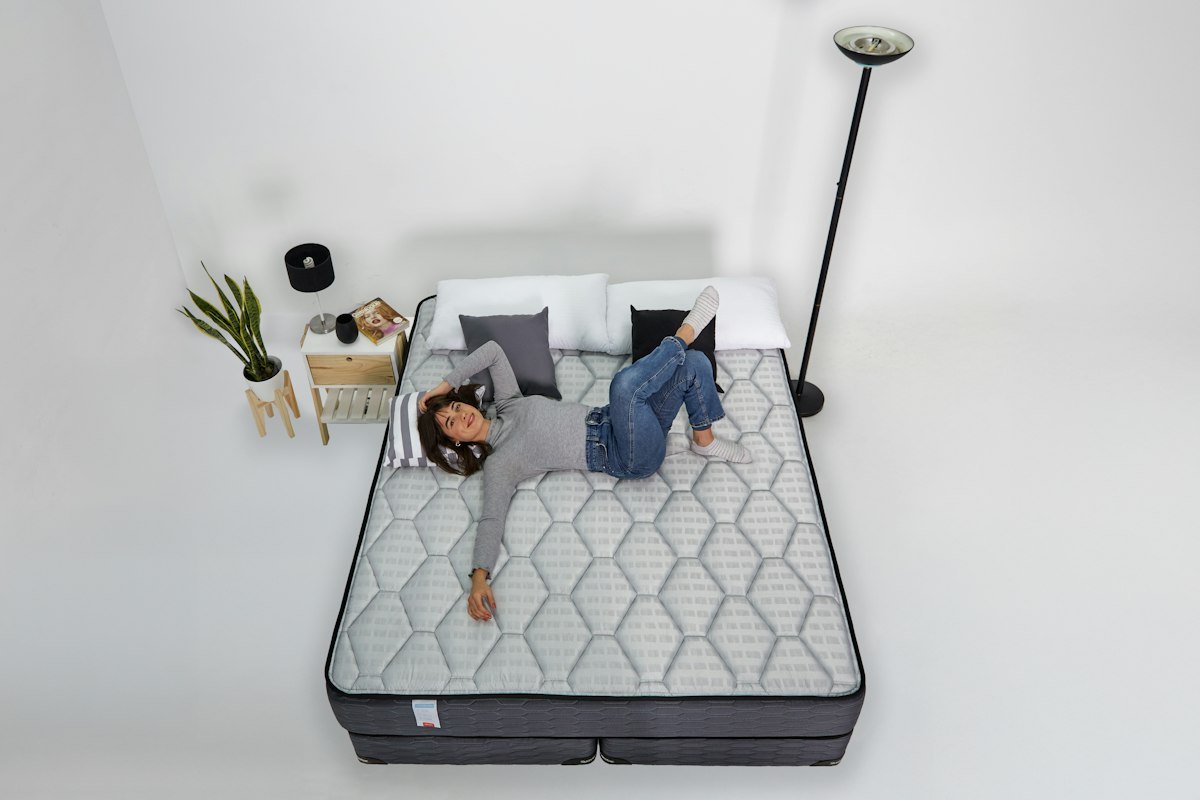
- Match firmness to your sleep position: Side sleepers usually do best around medium (about 5–6.5 out of 10), back sleepers around medium-firm (6–7.5), and stomach sleepers on firm (7.5+), so the hips don’t sink below the shoulders.
- Factor in body weight: Heavier sleepers sink deeper, so a mattress feels softer to them. Sleepers over about 230–250 lb should look at reinforced hybrids like the WinkBed Plus.
- Look for zoned support: Zoned coils or lumbar layers are firmer under the waist and softer under the shoulders, which helps keep the spine aligned.
- Hybrid vs foam: Hybrids give more lift, airflow and edge support, and are easier to move on. Memory foam offers deeper pressure relief and better motion isolation but sleeps warmer.
- Edge support: Firm edges make sitting down and getting out of bed easier, which matters on stiff mornings.
- Use the trial: It can take a few weeks to adjust to a new mattress. Pick a brand with a long trial and check return fees before you buy.
- Consider your base: An adjustable base that raises the head or knees can make lying down more comfortable for some people.
FAQ
Is a firm mattress better for back pain?
Not always. Research and sleep experts generally point to medium-firm as a good starting point for many people, with firmer beds suiting stomach sleepers and heavier back sleepers, and softer beds suiting side sleepers. A mattress that is too firm can create pressure points, while one that is too soft can let your hips sag.
Can a mattress cause back pain?
An old, sagging or poorly matched mattress can contribute to morning stiffness. If your mattress has visible dips or you feel better after sleeping somewhere else, it may be time for a new one. For persistent or severe pain, see a doctor.
How long does it take to adjust to a new mattress?
Many brands suggest giving it about 30 days, which is why most require you to keep a mattress for a few weeks before returning it. Check the trial terms for your model.
What is the best sleeping position for back pain?
Back and side sleeping are generally easier on the spine than stomach sleeping. A pillow under the knees (back sleepers) or between the knees (side sleepers) can help keep the spine neutral. Ask your doctor or physical therapist what is best for your situation.
Related guides
- The Best Mattress for Side Sleepers
- The Best Hybrid Mattresses
- The Best Adjustable Beds
- Big Fig vs Saatva HD: Best Mattress for Heavier Sleepers?
- Mattress & Sleep Buying Guides
Sources
We drew testing notes and specs from Tom’s Guide and TechRadar, plus manufacturer specifications from Helix, WinkBeds, DreamCloud, Nectar, Bear, Brooklyn Bedding, Sealy and Siena. Owner feedback is summarized in our own words from public reviews. Photos courtesy of Unsplash.