
AmazingBuyz is reader-supported. When you buy through links on our site, we may earn an affiliate commission at no extra cost to you. Learn more.
The best booster seats do one simple job very well: they lift a big kid so the adult seat belt crosses the strong parts of their body, the middle of the shoulder and low across the hips. We compared specs, expert crash and usability testing, IIHS belt-fit ratings and owner reviews to pick the boosters worth buying in 2026, from a pocket-size carpool seat to premium rigid-LATCH models that last until the belt fits on its own.
Part of our Baby & Kids Buying Guides.

Quick picks
Price ranges: $ under $75, $$ $75-$150, $$$ $150-$250, $$$$ $250+.
| Product | Best for | Price range | |
|---|---|---|---|
| Nuna AACE | Best overall | $$$$ | See price |
| Chicco KidFit Zip Air Plus 2-in-1 | Best value high-back | $$$ | See price |
| Graco Highback TurboBooster | Best budget | $ | See price |
| Clek Oobr | Best premium build | $$$$ | See price |
| Graco Affix Youth Booster with LATCH | Budget pick with LATCH | $$ | See price |
| Britax Highpoint | Most side-impact padding | $$$ | See price |
| Diono Monterey 4DXT | Most growing room | $$$ | See price |
| Peg Perego Viaggio Flex 120 | Tall kids and easy use | $$$$ | See price |
| Graco Tranzitions 3-in-1 | Harness-to-booster | $$ | See price |
| BubbleBum Inflatable Booster | Travel and carpools | $ | See price |
1. Nuna AACE: Best Overall Booster Seat
The Nuna AACE earned top marks in BabyGearLab’s crash-test analysis and is one of the easiest boosters to live with day to day. Rigid LATCH connectors lock it to the car so it never becomes a loose object when your child hops out, the headrest is well padded for naps, and the seatback reclines to match sloped vehicle seats. It is expensive, but it converts to a backless booster with a higher 120 lb limit, so it covers the entire booster stage.
Key specs
- Type: high-back and backless
- High-back: 40-110 lb, 38-60 in
- Backless: 50-120 lb
- Rigid LATCH connectors
- About 16 lb, 16 in wide
👍 Pros
|
👎 Cons
|
What owners say: Parents like how solid it feels once clicked in and how easily kids buckle themselves; the most common complaint is the price for what looks like a simple seat.
2. Chicco KidFit Zip Air Plus 2-in-1: Best Value High-Back Booster
The KidFit family is a favorite of several expert reviewers, and the Zip Air Plus version adds breathable mesh, a zip-off washable cover and a padded leg rest that makes long drives easier. BabyGearLab rated its crash-test results above average and found it easy to install with push-button LATCH. Ten headrest positions and two recline settings help you get a clean belt fit in most cars.
Key specs
- Type: high-back and backless
- High-back: 40-110 lb, 38-57 in
- Push-button LATCH with SuperCinch tightener
- About 12 lb, about 18 in wide
- 10 headrest positions, 2 recline positions
👍 Pros
|
👎 Cons
|
What owners say: Families praise the comfort and the cooler mesh in summer; a recurring gripe is the shoulder belt popping out of the guide as kids wiggle out.
3. Graco Highback TurboBooster: Best Budget Booster Seat
The TurboBooster is the seat many parents grew up seeing, and it still earns an IIHS Best Bet rating for belt fit. It is light, narrow enough to help with three-across setups, and has more padding than most budget seats, plus two cup holders and a slide-out storage tray. The base version has no LATCH, so buckle it in even when it is empty.
Key specs
- Type: high-back and backless
- High-back: 30-100 lb, 38-57 in
- Backless: 40-100 lb, 43-57 in
- About 8 lb, about 16.5 in wide
- No LATCH
👍 Pros
|
👎 Cons
|
What owners say: Owners call it a no-fuss value that works well as a second or grandparent seat; some wish it had LATCH so it stayed put between rides.
4. Clek Oobr: Best Premium Booster Seat
The Clek Oobr is built like a small tank, with a magnesium-reinforced frame, rigid LATCH, energy-absorbing foam and an adjustable recline. It is an IIHS Best Bet and is made in North America, with low-emission fabric options including Merino wool. The trade-off is weight: at about 20 lb it is not the seat you want to move between cars every morning.
Key specs
- Type: high-back and backless
- 40-100 lb; 38-57 in high-back
- Rigid LATCH connectors
- About 20 lb, about 18 in wide at the base
- Adjustable recline
👍 Pros
|
👎 Cons
|
What owners say: Owners rave about the build quality and how locked-in it feels; complaints focus on weight and the cover not being machine washable.
5. Graco Affix Youth Booster with LATCH: Best Budget Booster with LATCH
The Affix is essentially a TurboBooster with LATCH connectors added, so it stays anchored to the car when nobody is sitting in it. It keeps the same light, narrow shell, adjustable headrest, cup holder and storage, and it also converts to backless. For many families it is the sweet spot between price and convenience.
Key specs
- Type: high-back and backless
- High-back: 30-100 lb, 38-57 in
- Backless: 40-100 lb, 40-57 in
- LATCH connectors
- About 9.5 lb, about 16.5 in wide
👍 Pros
|
👎 Cons
|
What owners say: Parents like that it installs in seconds and kids can buckle themselves; a few note the fabric wears faster than pricier seats.
6. Britax Highpoint: Most Side-Impact Padding
The Highpoint wraps the head and torso in three layers of side-impact protection and adds a lap-belt clip that helps keep the belt low on the hips. Breathable Cool Flow fabric, ten headrest settings and clear belt guides make it comfortable and easy to fit correctly, and it handles kids up to 120 lb. Its wide base can make it hard to place next to another car seat.
Key specs
- Type: high-back and backless
- High-back: 40-120 lb, 38-63 in
- LATCH with tightening system
- About 13 lb, about 21.5 in wide at the base
- Three layers of side-impact protection
👍 Pros
|
👎 Cons
|
What owners say: Owners like the cushy wings and how well the belt stays in place; the width is the main complaint in smaller cars.
7. Diono Monterey 4DXT: Most Growing Room
The Monterey’s side wings expand outward as your child broadens, and the headrest has 11 height positions, so it fits a wide range of kids for years. It is an IIHS Best Bet with four layers of side-impact protection, padded armrests and good airflow. Availability can be spotty, and the LATCH is the older hook-style type.
Key specs
- Type: high-back, converts to backless
- 40-120 lb
- Expandable width with 11 headrest positions
- Hook-style LATCH
- About 19 lb
👍 Pros
|
👎 Cons
|
What owners say: Parents of broad-shouldered or tall kids say it fits long after other boosters felt tight; some find it bulky to move.
8. Peg Perego Viaggio Flex 120: Best for Tall Kids
BabyGearLab named the Viaggio Flex 120 its easiest booster to use, and it has one of the tallest fits around at up to 63 inches and 120 lb. LATCH installation is quick, the seat adjusts in many ways, and it folds for storage or trips. It is a high-back-only seat with no armrests, which some kids find odd at first.
Key specs
- Type: high-back only
- 40-120 lb, 39-63 in
- LATCH connectors
- About 15.7 lb, about 16.3 in wide
- Folds for storage
👍 Pros
|
👎 Cons
|
What owners say: Families with tall kids say it buys extra years of good belt fit; the price and missing armrests are the usual knocks.
9. Graco Tranzitions 3-in-1: Best Harness-to-Booster Seat
If your preschooler is outgrowing a convertible seat but is not mature enough to sit still in a belt, the Tranzitions starts as a 5-point harness seat and later becomes a high-back and then backless booster. It is light and fairly narrow, with a no-rethread harness and a washable cover, and it holds an IIHS Best Bet rating in booster mode.
Key specs
- Harness: 22-65 lb, 27-49 in
- High-back booster: 30-100 lb, 38-57 in
- Backless: 40-100 lb, 43-57 in
- About 13 lb, about 17.5 in wide
👍 Pros
|
👎 Cons
|
What owners say: Parents like getting a harness and booster in one budget seat; some say tightening the installation takes practice.
10. BubbleBum Inflatable Booster: Best for Travel and Carpools
The BubbleBum is an inflatable backless booster that weighs about two pounds and packs into a bag, so it fits easily in a backpack for flights, rideshares and carpool days. It is not meant to replace a high-back seat for daily driving, and testers note it can shift under a wiggly child, but it beats no booster at all when you are on the move.
Key specs
- Type: backless only
- 40-100 lb, 40-57 in
- About 1-2 lb, about 11 in wide
- Inflates and deflates in seconds
👍 Pros
|
👎 Cons
|
What owners say: Travelers love how small it packs; owners agree it is best as a backup seat rather than the everyday booster.
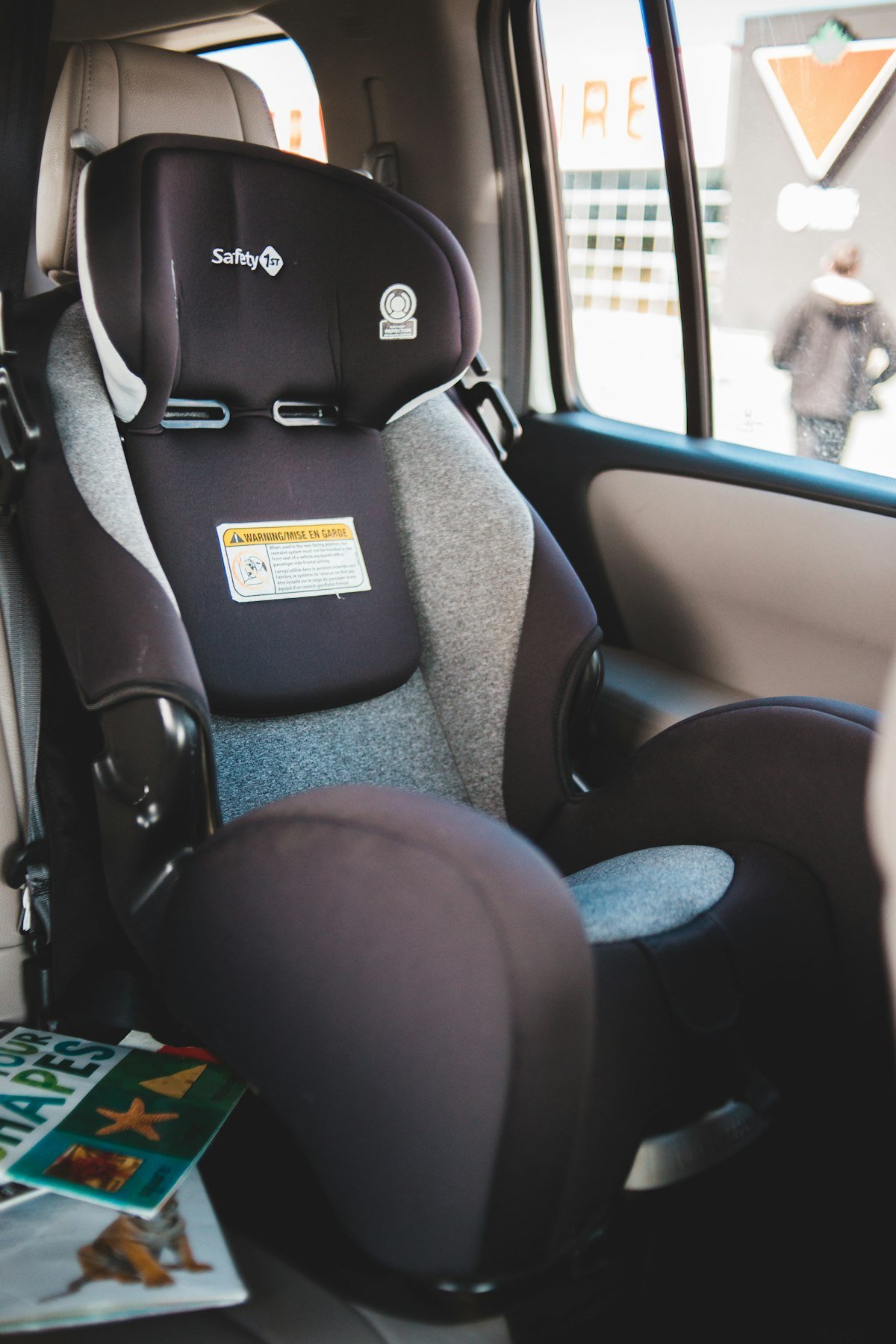
How to choose the best booster seat
- Readiness first. Most boosters start around 40 lb and 38-40 inches, but maturity matters as much as size. A child who slouches, leans out of the belt or unbuckles needs a harnessed seat a while longer. Toddlers should not ride in boosters.
- High-back vs backless. A high-back booster positions the shoulder belt with a guide, adds side protection and gives sleepy kids a headrest. Backless boosters are fine once the shoulder belt crosses mid-shoulder on its own and the vehicle seat has a head restraint behind the child’s head.
- Belt fit ratings. The IIHS rates boosters on how well they position the belt. Best Bet seats give a good fit in most cars, but always check fit in your own vehicle.
- LATCH. Boosters rely on the seat belt to protect your child, but LATCH connectors keep an empty booster from flying around in a crash and make the seat feel more stable.
- Width. Narrow seats (around 16-17 inches) help with three-across rows and tight back seats; wide, padded seats like the Highpoint are comfy but take space.
- Weight and height limits. A seat rated to 110-120 lb and 60+ inches will last longer for tall kids.
- Everyday extras. Washable covers, cup holders, recline and armrests matter on long drives.
FAQ
When can a child move to a booster seat?
Follow your harnessed seat’s limits and the booster maker’s minimums, usually around 40 lb and 38-40 inches. Most kids are at least 5 before they can sit correctly for a whole ride. Keep them harnessed until they reach the harness’s top limit if they are not ready.
When can a child stop using a booster?
When the adult belt fits without it: back against the seat, knees bending at the seat edge, lap belt low on the hips, shoulder belt across mid-chest and shoulder, and able to stay that way the whole trip. For many kids that is somewhere between 10 and 12 years old, depending on height and the car.
Is a high-back booster safer than a backless booster?
A high-back booster helps position the shoulder belt and supports a sleeping child’s head, which is why it is usually recommended for younger booster riders. A backless booster is acceptable once belt fit is correct and the vehicle head restraint is high enough.
Do booster seats expire?
Yes. Most boosters carry an expiration date, often in the 6-10 year range. Check the label on the seat and the manual, and replace any seat that has been in a moderate or severe crash according to the manufacturer’s rules.
Related guides
- The Best Harness Booster Car Seats
- The Best All-in-One Car Seats of 2026
- The Best Convertible Car Seats of 2026
- The Best Infant Car Seats of 2026
- Best Minivans for Families
- Baby & Kids Buying Guides
Sources
We compared specs, expert testing and owner reviews from BabyGearLab, Mommyhood101, Lucie’s List and manufacturer listings. Owner feedback is summarized in our own words from public reviews. Photos courtesy of Unsplash.