
AmazingBuyz is reader-supported. When you buy through links on our site, we may earn an affiliate commission at no extra cost to you. Learn more.
A winter car emergency kit is the cheapest insurance you can carry from November to March. Most winter trips end fine, but a spin-out, a dead battery or a closed highway can leave you sitting in a cold car for hours. This guide covers what to pack, how to get your vehicle ready, what to do if you get stranded, and the snow-driving habits that keep you from needing the kit at all.
Part of our Disaster Prep hub, a season-by-season guide to getting ready for whatever your region gets.
Key numbers to know
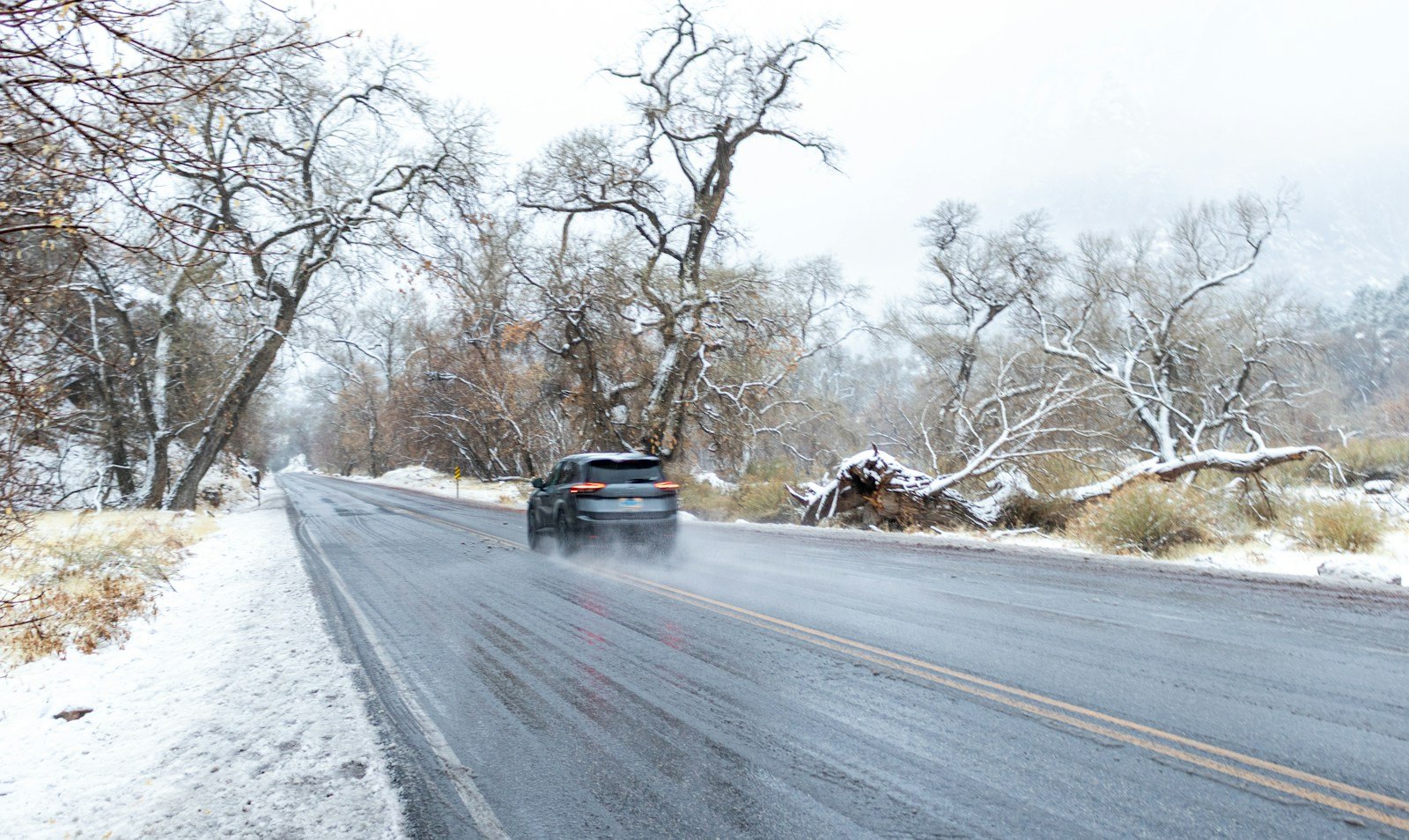
- 24% of weather-related vehicle crashes happen on snowy, slushy or icy pavement, and another 15% happen while snow or sleet is falling (Federal Highway Administration).
- More than 1,300 people are killed and more than 116,800 injured each year in crashes on snowy, slushy or icy pavement (FHWA).
- In 2024, an estimated 131,698 police-reported crashes happened during snow or sleet, including 365 fatal crashes (NHTSA).
- Average speeds on arterial roads drop 30 to 40 percent on snowy or slushy pavement, which is why a 30-minute drive can turn into an hour or more (FHWA).
- Over 70 percent of U.S. roads are in snowy regions that average more than 5 inches of snow a year (FHWA).
- NHTSA’s minimum tread depth is 2/32 inch; Colorado’s Traction Law requires 3/16 inch (6/32) on the I-70 mountain corridor from Sept. 1 to May 31 (NHTSA, CDOT).
What the winter alerts mean for drivers
The National Weather Service uses a small set of winter alerts. The trick for drivers is to treat each one as a decision point: an advisory means slow down and pack the kit, a warning means postpone the trip if you can.
| Alert | What NWS says it means | What a driver should do |
|---|---|---|
| Winter Weather Advisory | Snow, blowing snow, ice or sleet is expected, but not severe enough for a warning. | Drive only if needed, allow extra time, make sure the kit is in the car and the tank is near full. |
| Winter Storm Watch | Conditions are favorable for a significant winter storm (heavy snow, heavy sleet, ice storm or blowing snow). | Plan around it: move trips earlier or later, top off fuel and washer fluid, charge phones and power banks. |
| Winter Storm Warning | A significant winter weather event (snow, ice, sleet, blowing snow or a mix) is happening or imminent. | Avoid travel. If you must go, tell someone your route and arrival time. |
| Blizzard Warning | Frequent gusts of 35 mph or more with falling or blowing snow, often cutting visibility below 1/4 mile for three hours or more. | Do not drive. NWS: if you get stranded, stay with your vehicle and wait for help. |
| Ice Storm Warning | Usually issued for ice accumulation of about 1/4 inch or more. | Stay off the road. Ice brings down trees and power lines across roads. |
One nuance from the NWS: warnings are issued by local offices, so the snowfall that triggers a Winter Storm Warning in the Northern Plains is much higher than in the Southeast. A “warning” in Atlanta may be a few inches; in North Dakota it is a much bigger event. Either way, it means local roads and crews will struggle.
Before, during and after: a winter driving timeline
| When | What to do |
|---|---|
| Early fall (now) | Have the battery tested, check tread depth and tire pressure, fill the washer reservoir with winter fluid with de-icer, check coolant and all lights, and pack the kit below. |
| When an advisory or watch is issued | Fill the tank, charge phones and the jump starter, add water and snacks, put boots and a warm layer in the car, and check your state’s road conditions (511) before leaving. |
| Before every winter drive | Brush all snow off the roof, hood, windows and lights; check that the tailpipe is clear; tell someone your route if conditions are poor. |
| On the road | Slow down, double or triple your following distance, accelerate and brake gently, and stay well back from snowplows (CDOT advises three to four car lengths). |
| If you’re stranded | Stay with the car, make it visible, keep the tailpipe clear and run the engine only in short bursts (details below). |
| After the storm | Restock what you used, recharge the jump starter and power bank, and check tire pressure (cold air lowers it). |
Get the car ready first
A kit helps when things go wrong. A well-prepared car keeps them from going wrong in the first place. NHTSA’s winter checklist comes down to a few items:
- Battery. NHTSA notes that “when the temperature drops, so does battery power.” A battery that cranks slowly in October may not start the car at 5°F. Most auto parts stores and repair shops will load-test it.
- Tires. Inflate to the pressure on the driver’s door placard, not the maximum printed on the tire. NHTSA’s minimum tread is 2/32 inch; the penny test (if you can see the top of Lincoln’s head, replace the tire) checks that. For real snow traction, more tread is better, which is why Colorado requires 3/16 inch in the mountains.
- Washer fluid and wipers. NHTSA warns you can go through a lot of fluid in one storm. Use a winter blend with de-icer and carry a spare jug.
- Coolant and lights. Check that coolant meets the manufacturer’s spec and that headlights, brake lights, turn signals and flashers all work.
- Fuel. NHTSA says to keep the tank close to full; Minnesota’s emergency management office says at least half full to avoid gas-line freeze. A full tank is also your heat source if you get stuck.
From the trades: We spend the winter driving work vans over Colorado passes to no-heat calls, so our kits live in a lidded tote that stays in the vehicle from October to May. Two habits matter most. First, treat your tailpipe like a furnace flue: if the exhaust can’t get out, carbon monoxide comes back in where the people are. We dig out the tailpipe before starting a snowed-in vehicle, every time, just as we check a flue before firing a furnace. Second, cold kills batteries and anything with a battery in it. Lithium jump starters and power banks lose capacity in a frozen car, so we top them off every couple of weeks and bring them inside on sub-zero nights when we can.
If you get stranded: the official rules
These steps come from NHTSA, the National Weather Service, the CDC and Minnesota’s Homeland Security and Emergency Management, which writes some of the best winter survival guidance in the country.
- Stay with your vehicle. NHTSA and NWS both say this. Minnesota HSEM explains why: staying in the car lowers your risk of frostbite and hypothermia and makes you easier for rescuers to find. Walking in a blizzard is how people get lost.
- Make yourself visible. Tie a bright cloth or flag to the antenna or a window, and keep the dome light on at night (NHTSA). Set out reflective triangles or flares if it’s safe to step out.
- Clear the tailpipe. The CDC warns that a blocked tailpipe lets carbon monoxide, an odorless, colorless and deadly gas, build up quickly inside the vehicle. Check it every time you run the engine, because blowing snow refills it.
- Run the engine in short bursts. NHTSA says to run it only sporadically, just long enough to stay warm. Minnesota HSEM suggests about once an hour, every half hour in extreme cold, with one window cracked slightly open.
- Layer up and stay dry. Put on the extra hat, gloves and boots from your kit, and wrap in blankets. Huddle together if there are several people.
- Limit sleep to short naps (Minnesota HSEM) and keep moving your arms and legs to stay warm.
- Watch for cold injury. The CDC lists hypothermia warning signs in adults as shivering, exhaustion, confusion, fumbling hands, memory loss, slurred speech and drowsiness. Frostbite can start as redness or pain, then white or grayish-yellow skin that feels firm or waxy, and numbness. Call 911 if you have signal and anyone shows these signs.
Sizing math: how much to pack
You don’t need a survival bunker in the trunk. You need enough to stay warm, hydrated and reachable until help arrives, which on a closed interstate can mean overnight. Here is the simple math we use.
| Supply | Formula | Example (2 adults, plan for 24 hours) |
|---|---|---|
| Water | People × days × 1 gallon (Ready.gov’s household guideline, a generous target for a car) | 2 × 1 × 1 = 2 gallons, or a case of bottles. Leave headspace; water can freeze in a cold car. |
| Food | People × meals, using high-energy food that won’t freeze solid | 2 × 3 = 6 bars or pouches, plus a few extra |
| Warmth | One blanket or sleeping bag per seat you normally fill, plus a hat, gloves and dry socks per person | 2 wool or fleece blankets + 2 emergency blankets |
| Phone power | Power bank Wh × about 0.6 (cold and conversion losses) ÷ phone battery Wh | A 74 Wh (20,000 mAh) bank × 0.6 ÷ about 15 Wh per phone = roughly 3 phone charges |
| Fuel for heat | Hours of heat = gallons in tank ÷ your car’s idle burn rate (gal/hr; check your trip computer while idling) | Start every winter trip with at least a half tank so you have hours of short engine-on cycles in reserve |
The 0.6 factor in the phone row is a conservative rule of thumb, not a lab figure. Real-world results vary with temperature, cable and phone, so err on the side of a bigger bank.
Snow driving: the habits that matter most
- Slow everything down. Accelerate, brake and steer gently. FHWA data showing arterial speeds dropping 30 to 40 percent on snowy roads reflects what careful drivers do naturally.
- Leave more room. Increase your following distance well beyond your dry-road habit, and much more behind plows.
- Brake correctly in a skid. Minnesota HSEM: if you have anti-lock brakes (ABS), apply steady, firm pressure. Never pump ABS brakes.
- Clear the whole car. Snow sliding off the roof blinds you and the drivers behind you. Brush off headlights and taillights too.
- Don’t pass plows in tandem. In Colorado, passing snowplows working in tandem formation is a Class A offense.
- AWD helps you go, not stop. All-wheel drive improves acceleration in snow; it does nothing for braking. Tires matter more.
Common winter driving mistakes
- Running the engine while stuck without checking the tailpipe.
- Leaving the car to walk for help in blowing snow.
- Setting off with a quarter tank “because the station is on the way.”
- Inflating tires to the number on the sidewall instead of the door placard.
- Packing a kit in October and never checking it; dead batteries and expired snacks don’t help.
- Scraping a peephole in the windshield instead of clearing every window, mirror and light.
- Wearing office shoes and a light jacket on a mountain drive because “we’ll be in the car the whole time.”
The 10 things worth stocking
This list is built from the CDC, NHTSA and Minnesota HSEM car kit recommendations. Add a first aid kit with any medications you need, a hat, gloves and boots for each person, water and snacks, and you are covered.
1. Ice scraper and snow brush
Why: Every official list starts here. You can’t drive safely until every window, mirror and light is clear.
Look for: A long or telescoping handle to reach the middle of the roof and windshield, a foam or soft-bristle head that won’t scratch paint, and a sturdy plastic or brass-edged blade for ice.
2. Compact snow shovel
Why: Digging out around tires and the tailpipe is often what gets you moving again, and what keeps carbon monoxide out of the cabin while you wait.
Look for: An aluminum or reinforced-polymer blade, a collapsible handle that fits under the cargo floor, and a D-grip you can hold with gloves on.
See car snow shovels on Amazon →
3. Traction aids: mats, sand or cat litter
Why: NHTSA, the CDC and Minnesota HSEM all recommend abrasive material like sand or cat litter under spinning drive wheels. Reusable traction mats do the same job without the mess.
Look for: Mats with aggressive teeth and a tether or carry bag; or a few small bags of plain clay litter or traction sand you can pour where you need it.
4. Tire chains or textile snow socks
Why: The CDC lists tire chains for the car kit, and in Colorado chains or an approved alternative traction device on two drive tires are how a car without qualifying tires complies with the Traction Law. During a Passenger Vehicle Chain Law, every vehicle needs them.
Look for: The exact size printed on your tire sidewall, a design approved for your vehicle (check the owner’s manual, some cars have tight clearance), and a practice install in your driveway before you need it.
See tire chains on Amazon →See snow socks on Amazon →
5. Portable jump starter (or jumper cables)
Why: Cold weakens batteries, and a dead battery in a parking lot at night is the most common winter breakdown. A lithium jump starter doesn’t need a second car; NHTSA and the CDC list jumper cables as the minimum.
Look for: A rating matched to your engine size (bigger V8 and diesel engines need more), reverse-polarity protection, a cold-weather operating range, and a USB port to double as a phone charger. Recharge it every few weeks. Our jump starter guide compares specific models.
6. Portable tire inflator
Why: Tire pressure drops as temperatures fall, and underinflated tires grip and steer worse. The CDC also suggests carrying compressed-air sealant for emergency tire repair.
Look for: A 12V or cordless inflator with a digital gauge and auto shutoff at a preset pressure, plus a long enough hose to reach all four tires. See our tire inflator picks.
See tire inflators on Amazon →
7. Warm blankets and emergency blankets
Why: If you’re stranded, the engine is off most of the time. Blankets are what keep you warm between short engine-on cycles.
Look for: A wool or synthetic blanket (both insulate when damp, unlike cotton) for each regular passenger, plus compact Mylar emergency blankets or bivy bags as backups. Add chemical hand warmers.
See wool blankets on Amazon →See emergency blankets on Amazon →
8. Reflective triangles or LED road flares
Why: NHTSA and the CDC both list flares or emergency markers. In low visibility, a stopped car on the shoulder is hard to see until it’s too late.
Look for: Folding reflective warning triangles that stand up in wind, or battery LED flares (no open flame, reusable). Add a bright distress flag for the antenna.
See LED flares on Amazon →See warning triangles on Amazon →
9. Flashlight or headlamp with spare batteries
Why: Winter days are short. You’ll need light to dig out, fit chains or check the tailpipe, and a headlamp keeps both hands free.
Look for: LED output with a red mode, lithium batteries (they handle cold better than alkaline), and a water-resistance rating. A battery-powered or hand-crank radio is a good companion, per the CDC.
10. Power bank and car charger
Why: Your phone is how you call for help, check 511 road conditions and share your location. The CDC puts a phone, portable charger and extra batteries at the top of its car list.
Look for: Use the sizing formula above; around 20,000 mAh covers a few charges. Pick one with USB-C power delivery, and keep a 12V car charger plugged in too.
Winter driving risks by region
| Region | Main winter driving hazard | Kit emphasis |
|---|---|---|
| Rocky Mountains (CO, UT, WY, MT, ID) | Mountain passes, sudden whiteouts, long closures; Colorado’s Traction Law on I-70 from Sept. 1 to May 31 | Qualifying tires (3/16 inch tread in CO) or chains/ATDs, extra fuel margin, sleeping-bag-level warmth |
| Northern Plains (ND, SD, MN, NE) | Blizzards with blowing snow, extreme cold, long empty stretches | Blankets per passenger, high-visibility flag, full tank, power bank |
| Great Lakes (MI, OH, NY, PA, WI) | Lake-effect snow bands that hit fast and locally, sometimes with sudden zero visibility | Snow brush, shovel, traction aids, extra washer fluid |
| Northeast and Mid-Atlantic | Nor’easters, heavy wet snow, mixed precipitation and congested highways | Shovel, jump starter, food and water for long backups |
| South and Southeast | Ice storms and freezing rain on roads with fewer treatment crews; drivers less used to ice | Ice scraper, traction aids, and staying home during ice warnings |
| Pacific Northwest and Sierra Nevada | Mountain-pass chain requirements, heavy snow at elevation while lowlands get rain | Chains or snow socks you’ve practiced fitting, warm layers |
Check your state DOT or 511 service for chain and traction requirements before mountain travel; rules vary by state and by storm.
FAQ
What should be in a winter car emergency kit?
Start with the CDC and NHTSA basics: ice scraper and brush, shovel, sand or cat litter for traction, jumper cables or a jump starter, flashlight, flares or reflectors, first aid kit with any needed medications, blankets and extra warm clothing, water and non-perishable snacks, and a phone with a charger or power bank. Add tire chains if you drive in the mountains.
Should I run my car to stay warm if I’m stuck in snow?
Yes, but only in short bursts and only after clearing snow from the tailpipe. NHTSA says to run the car sporadically, just long enough to stay warm. Minnesota HSEM suggests about once an hour (every half hour in extreme cold) with a window cracked slightly. A blocked tailpipe can fill the car with carbon monoxide quickly.
Should I stay in my car or walk for help in a blizzard?
Stay with the vehicle. NHTSA and the National Weather Service both advise it, and Minnesota HSEM notes that staying put lowers your risk of hypothermia and frostbite and makes rescue easier. Follow instructions from local officials and 911 dispatchers.
Do I need snow tires, or is all-wheel drive enough?
AWD helps you accelerate but doesn’t help you stop or turn on ice. Tires with good tread do more for safety. Colorado’s Traction Law, for example, requires even AWD and 4WD vehicles to have tires with at least 3/16 inch of tread that are winter, all-weather or mud-and-snow rated, or else chains or an approved traction device.
How full should I keep my gas tank in winter?
NHTSA says close to full whenever possible, and Minnesota HSEM says at least half full to avoid gas-line freeze. If you get stuck, that fuel is your heat.
Related guides
- Best All-Weather Floor Mats for Winter
- Disaster Prep hub: what to get ready for, season by season
- Winter Storm and Power Outage Prep: What to Stock Before the First Blizzard
- The Best Portable Jump Starters
- Best Family Cars for Snow: AWD SUVs and Minivans Compared
- How to Layer for Cold Weather: The 3-Layer System
Sources
FHWA Road Weather Management: Snow and Ice; NHTSA: Winter Driving Tips; National Weather Service: Winter Watches, Warnings and Advisories; CDC: Preparing for a Winter Storm; CDC: Preventing Hypothermia and Frostbite; CDC: Clear Snow from Tailpipes; Minnesota HSEM: Winter Driving and Survival Tips; CDOT: Traction Law Requirements; CDOT: Chain Law FAQ; Ready.gov: Build a Kit. Photos courtesy of Unsplash.