
AmazingBuyz is reader-supported. When you buy through links on our site, we may earn an affiliate commission at no extra cost to you. Learn more.
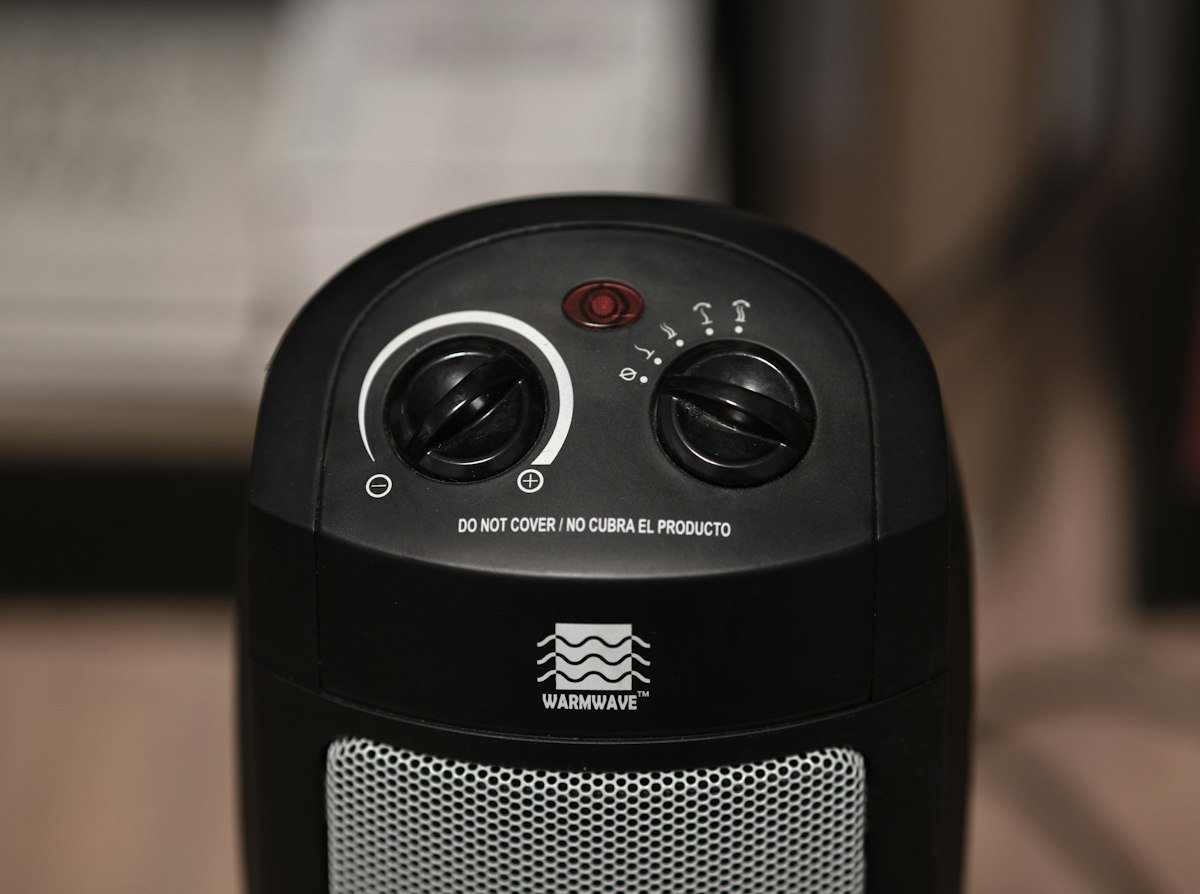
Finding the best power station for space heater use comes down to two numbers: continuous AC output high enough to carry a 1,500-watt heater without tripping, and enough battery capacity to keep it running longer than a few minutes. Most portable power stations fail one test or the other. We compared specs, expert testing and owner reviews to find the eight models that can realistically keep one room warm during a winter outage, and we did the runtime math so you know what to expect before you buy.
Part of our Home Comfort, Backup Power & Tool Guides.
Quick picks
Price ranges: $ under $500, $$ $500-$1,000, $$$ $1,000-$2,000, $$$$ $2,000+.
| Product | Best for | Price range | |
|---|---|---|---|
| EcoFlow DELTA Pro 3 | Longest heater runtime | $$$$ | See price |
| Anker SOLIX F3800 Plus | Most output headroom | $$$$ | See price |
| ALLPOWERS R3500 | Big capacity for the money | $$$ | See price |
| Jackery Explorer 2000 Plus | Expandable mid-size | $$$ | See price |
| Bluetti AC200L | Value for resistive heat | $$-$$$ | See price |
| ALLPOWERS R2500 | Best value 2kWh class | $$-$$$ | See price |
| EcoFlow DELTA 3 Plus | Short heat bursts, portable | $$ | See price |
| Anker SOLIX C1000 | Heated blankets and budget | $-$$ | See price |
Estimated space heater runtime by model
These are our own estimates using a common rule of thumb: battery watt-hours x 0.85 (to allow for inverter losses) divided by heater watts. Real runtime varies with temperature, battery age and how often the heater’s thermostat cycles.
| Model | Capacity | At 1,500W (high) | At 750W (low) |
|---|---|---|---|
| EcoFlow DELTA Pro 3 | 4,096Wh | about 2.3 hr | about 4.6 hr |
| Anker SOLIX F3800 Plus | 3,840Wh | about 2.2 hr | about 4.4 hr |
| ALLPOWERS R3500 | 3,168Wh | about 1.8 hr | about 3.6 hr |
| Jackery Explorer 2000 Plus | 2,042Wh | about 1.2 hr | about 2.3 hr |
| Bluetti AC200L | 2,048Wh | about 1.2 hr | about 2.3 hr |
| ALLPOWERS R2500 | 2,016Wh | about 1.1 hr | about 2.3 hr |
| EcoFlow DELTA 3 Plus | 1,024Wh | about 35 min | about 1.2 hr |
| Anker SOLIX C1000 | 1,056Wh | about 35 min | about 1.2 hr |
1. EcoFlow DELTA Pro 3: Best Overall for Heater Runtime
The DELTA Pro 3 is the station we would pick if the goal is to keep a bedroom or home office warm through a real outage rather than for half an hour. Its 4kWh battery is one of the largest in a single wheeled unit, and its 4,000W inverter carries a 1,500W heater with plenty of room left for lights, a router and a phone charger. It also outputs 240V and can grow with extra batteries, so it doubles as a serious home backup system. The trade-offs are weight and price: this is a machine you roll into place, not one you carry.
Key specs
- Capacity: 4,096Wh LiFePO4, expandable to 48kWh
- AC output: 4,000W continuous, 120V and 240V
- Rated for about 4,000 cycles
- Wheeled design, roughly 110 lb
👍 Pros
|
👎 Cons
|
What owners say: Owners like that it runs high-draw appliances without complaint and that the app makes it easy to watch remaining runtime; the most common complaints are the cost and how hard it is to move up stairs.
2. Anker SOLIX F3800 Plus: Most Output Headroom
Anker’s F3800 Plus pairs a 3,840Wh battery with a 6,000W inverter, the highest continuous output on this list. That matters if you want to run a space heater and a microwave, well pump or second heater circuit at the same time without the station shutting off. Anker itself positions this model as the one in its lineup for higher-wattage emergency heating, while it describes its smaller units as better for heated blankets. Like the EcoFlow, it is big, wheeled and priced as a home backup investment.
Key specs
- Capacity: 3,840Wh, expandable with add-on batteries
- AC output: 6,000W continuous, 120V and 240V
- Large solar input for recharging during long outages
- Wheeled chassis, roughly 130 lb
👍 Pros
|
👎 Cons
|
What owners say: Reviewers and owners praise its ability to run several heavy appliances at once and its broad port selection; complaints center on size, weight and cost.
3. ALLPOWERS R3500: Big Capacity for the Money
The R3500 gets you into the 3kWh class for less than the premium brands usually charge. With 3,168Wh of storage and a 3,200W inverter, it can run a 1,500W heater on high for close to two hours by our estimate, or a low setting for most of an evening. It is a sensible middle ground for buyers who want more than a 2kWh unit but do not need 240V or whole-home expansion.
Key specs
- Capacity: 3,168Wh
- AC output: 3,200W continuous
- Sold direct through the ALLPOWERS US store
👍 Pros
|
👎 Cons
|
What owners say: Buyers mostly point to value per watt-hour and steady output under heavy loads; some wish the app and accessories were as polished as the bigger brands.
4. Jackery Explorer 2000 Plus: Best Expandable Mid-Size
The Explorer 2000 Plus is a 2kWh station with an unusually strong 3,000W inverter, so a heater never pushes it near its limit. On its own it gives you a little over an hour of high heat, but Jackery’s add-on batteries let you expand it a great deal, so you can start modest and add capacity later. It also offers UPS-style switchover, which is handy if you keep it plugged in for other devices.
Key specs
- Capacity: 2,042Wh LiFePO4, expandable to 24kWh
- AC output: 3,000W continuous, 6,000W peak
- UPS switchover for connected devices
👍 Pros
|
👎 Cons
|
What owners say: Owners like the build quality and simple controls; the main gripe is how much it costs to add enough batteries for long heating sessions.
5. Bluetti AC200L: Best Value for Resistive Heat
The AC200L is a 2kWh LiFePO4 station with a 2,400W inverter and a Power Lifting mode that lets it run simple resistive loads, such as heaters and kettles, above its rated output. For a 1,500W heater you do not even need that mode, since the native output already clears it. It also has a 30A RV outlet and room to expand, which makes it a good fit for cabins and RVs as well as home outages.
Key specs
- Capacity: 2,048Wh LiFePO4, expandable to 8,192Wh
- AC output: 2,400W continuous, Power Lifting mode for resistive loads
- 30A RV output
- Rated for 4,000+ cycles
👍 Pros
|
👎 Cons
|
What owners say: Owners frequently mention it as a dependable workhorse for RV and outage use; app connectivity is the most common complaint.
6. ALLPOWERS R2500: Best Value 2kWh-Class Station
The R2500 delivers about the same battery size as the Jackery and Bluetti above, with a 2,500W inverter, usually for less money. It runs a 1,500W heater on high for around an hour, or a low setting for a couple of hours, and it can add an expansion battery when you want longer runtime. If you are shopping on value and want a station that also handles a fridge or sump pump later, this is a strong choice.
Key specs
- Capacity: 2,016Wh LiFePO4
- AC output: 2,500W continuous
- Expandable with an ALLPOWERS B1000 battery
👍 Pros
|
👎 Cons
|
What owners say: Buyers tend to highlight the value and the solid output; a few note that the unit is bulky to move between rooms.
7. EcoFlow DELTA 3 Plus: Best for Short Heat Bursts
The DELTA 3 Plus is the most portable station here that can still carry a full 1,500W heater, thanks to its 2,400W inverter. With about 1kWh of storage, expect roughly half an hour on high, so think of it as a way to take the chill off a room, warm up before bed, or run a low-watt heater longer. It switches over in about 10 milliseconds as a UPS and can expand to 5kWh, so it grows with you.
Key specs
- Capacity: 1,024Wh, expandable to 5kWh
- AC output: 2,400W continuous
- Solar input up to 1,000W
- 10ms UPS switchover
👍 Pros
|
👎 Cons
|
What owners say: Reviewers like how quickly it recharges and how quiet it is; owners note that heaters drain it fast, so most use it for lights, electronics and short warm-ups.
8. Anker SOLIX C1000: Best Budget Pick for Heated Blankets
The C1000 is the budget entry here. Its 1,800W output technically clears a 1,500W heater, but Anker itself says it is not built for continuous high-wattage heating. Where it shines is low-watt warmth: an electric blanket or heated mattress pad draws a small fraction of what a space heater does, so the C1000 can keep you warm through much of a night that way. It also recharges from a wall outlet in under an hour.
Key specs
- Capacity: 1,056Wh LiFePO4, expandable to 2,112Wh
- AC output: 1,800W continuous
- Full recharge in about 58 minutes
- 5-year warranty
👍 Pros
|
👎 Cons
|
What owners say: Owners value its compact size and quick charging for outages and camping; those who tried a full-size heater found the runtime short.
How to choose a power station for a space heater
- Continuous output first. Compare the heater’s wattage to the station’s continuous AC rating, not its surge rating. A 1,500W heater needs a station rated comfortably above 1,500W, ideally 2,000W or more so other devices can share it.
- Capacity sets runtime. Multiply watt-hours by about 0.85 and divide by heater watts. A 2kWh unit gives roughly an hour on high; a 4kWh unit gives a bit over two.
- Use the low setting. Many heaters have a 750W mode that roughly doubles runtime. Preheat on high briefly, then drop to low.
- Heat one room, not the house. Close doors, block drafts and cover windows so the heat you pay for in battery stays where you are.
- Consider low-watt alternatives. Heated blankets and mattress pads use far less power than a space heater and can run for hours on a mid-size station.
- Plan to recharge. Long outages need solar panels, a generator or expansion batteries. Check solar input and expansion options before you buy.
- Size the whole load. Add up the heater, fridge, lights and devices with our power station and generator sizing calculator.
FAQ
Can a portable power station run a space heater?
Yes, if its continuous AC output is higher than the heater’s wattage. Most heaters draw about 1,500W on high, so you need a station rated above that. The bigger issue is runtime: even a large unit only lasts a few hours on high.
How long will a 2,000Wh power station run a 1,500W heater?
Roughly an hour on high after inverter losses, and around two hours on a 750W low setting. Thermostat cycling can stretch that a bit if the room is already warm.
Can I run a space heater overnight on a power station?
Usually not on high. Even a 4kWh station runs out in a little over two hours at 1,500W. For overnight warmth, a heated blanket or mattress pad is far more practical.
Is it safe to run a heater from a power station indoors?
Battery power stations produce no exhaust, unlike fuel generators, which must never run indoors. Follow both the heater’s and the station’s manufacturer limits: plug the heater directly into the station (no power strips), keep it several feet from fabric and furniture, use a model with tip-over and overheat protection, keep the station ventilated and uncovered, and never leave a running heater unattended.
Related guides
- Best Power Station for a Furnace
- Best Portable Power Stations
- Best Home Battery Backup
- Winter Storm Power Outage Prep
- How to Stay Warm Without Heat
- Home Comfort, Backup Power & Tool Guides
Sources
Specs and runtime guidance were compared across PowerOutage.us, Anker SOLIX, TechRadar and manufacturer product pages. Owner feedback is summarized in our own words from public reviews. Photos courtesy of Unsplash.