
AmazingBuyz is reader-supported. When you buy through links on our site, we may earn an affiliate commission at no extra cost to you. Learn more.
The best e-bikes for commuting get you to work faster than a regular bike, without arriving sweaty, and cost far less to run than a car. The right one depends on your route: distance, hills, whether you carry it upstairs, and whether you ride in the rain. We compared specs, expert testing and owner reviews to pick the commuter e-bikes worth buying in 2026, from a 37-pound belt-drive city bike to long-range cruisers that cover 60+ miles per charge.
Part of our Outdoor, Kitchen & Pet Buying Guides.

Quick picks
| Product | Best for | Price range | |
|---|---|---|---|
| Velotric Discover 3 | Best Overall | $$$ | See price |
| Aventon Level 3 | Best Everyday Commuter | $$$ | See price |
| Ride1Up Roadster v3 | Best Lightweight Value | $$ | See price |
| Ride1Up Vorsa | Best for Hills & Cargo | $$ | See price |
| Lectric XPress 750 | Best Budget | $$ | See price |
| Tenways CGO600 Pro | Best Ultralight | $$ | See price |
| Velotric Fold 1 Plus | Best Folding | $$ | See price |
| Priority Current Plus | Best for Long Commutes | $$$$ | See price |
Price ranges: $ under $1,000 · $$ $1,000–$1,600 · $$$ $1,600–$2,500 · $$$$ $2,500+. E-bike prices change often, so check the current price on Amazon.
1. Velotric Discover 3: Best Overall
The Discover 3 is the most complete commuter package for the money. It pairs a torque sensor (for smooth, natural assist) with a big Samsung-cell battery rated for 65–80 miles, front suspension, and a 440-lb max load. Theft deterrents include an NFC card lock and Apple and Google device tracking.
Key specs
- Motor: rear hub, up to 750W
- Battery: 48V 15.2Ah Samsung cells (about 730Wh)
- Claimed range: 65–80 miles
- Torque and cadence sensors; Shimano 8-speed
- Weight: about 61 lb; max load 440 lb
- UL 2271 and UL 2849 certified; IPX7 rated
👍 Pros
|
👎 Cons
|
What owners say: Riders praise the smooth assist, range and customer service. Weight is the most common complaint, especially for anyone with stairs.
2. Aventon Level 3: Best Everyday Commuter
The Level 3 is one of the most-recommended commuter e-bikes because it’s dependable. It has a 500W motor that boosts up to 864W, a removable 720Wh-class battery that testers took to about 70 miles in pedal assist, and a choice of step-through or step-over frames.
Key specs
- Motor: 500W (up to 864W boost); 20 mph assist
- Battery: 36V 20Ah removable (about 720Wh)
- Tested range: about 70 miles in pedal assist
- Shimano Altus drivetrain; aluminum frame
- Weight: about 60 lb; 300-lb capacity
- UL certified; IPX5 rated
👍 Pros
|
👎 Cons
|
What owners say: Commuters say it just works day after day. Its weight is the most common downside.
3. Ride1Up Roadster v3: Best Lightweight Value
At about 40 lb, the Roadster v3 feels more like a fast city bike than a heavy e-bike. The belt-drive version is quiet and grease-free, the torque sensor makes the assist feel natural, and lights and fenders come standard. It’s Class 1–3 capable, so check local rules before riding at higher speeds.
Key specs
- Motor: 500W hub, 50Nm
- Top assisted speed: up to 25 mph (belt) or 28 mph (chain)
- Torque sensor; carbon belt drive option
- Weight: about 40 lb
- Integrated front light, rear fender light, fenders and chainguard
👍 Pros
|
👎 Cons
|
What owners say: Riders love how light and quick it feels. A firm ride and limited range in boost mode are the common trade-offs.
4. Ride1Up Vorsa: Best for Hills & Cargo
The Vorsa’s 750W motor is tuned for climbing, and a rear rack rated for 150 lb means it can double as a grocery or kid-gear hauler. It’s a versatile pick for hilly routes, with Samsung cells, Shimano 8-speed gearing and solid safety certifications.
Key specs
- Motor: 750W hub
- Battery: 48V 15Ah Samsung (about 720Wh)
- Claimed range: 30–60 miles
- Rear rack: 150 lb; total capacity 440 lb
- UL 2271 certified; IPX6 rated
👍 Pros
|
👎 Cons
|
What owners say: Owners like the power modes and hauling ability. Shipping damage and brake setup are the most common complaints.
5. Lectric XPress 750: Best Budget
The XPress 750 brings a 750W motor, front suspension and a removable battery to the lowest price on this list. It comes in step-through and crossover frames, and it’s UL 2849 certified, which is not a given at this price.
Key specs
- Motor: 750W rear hub
- Battery: 48V 14Ah removable (about 670Wh)
- Front suspension
- Rear rack: 30 lb; total capacity 330 lb
- UL 2849 certified; IP65 rated
👍 Pros
|
👎 Cons
|
What owners say: Buyers say it feels like a much pricier bike. A few report range falling short after several months.
6. Tenways CGO600 Pro: Best Ultralight
If you have to carry your bike up stairs or onto a train, the CGO600 Pro’s roughly 37-lb weight is a big deal. It rides quietly on a carbon belt, stops with hydraulic disc brakes, and rolls on puncture-resistant tires. It’s a Class 1 bike, so assist stops at 20 mph.
Key specs
- Motor: 350W rear hub, 45Nm
- Battery: 360Wh removable and lockable
- Claimed range: up to 53 miles
- Class 1 (20 mph); carbon belt drive
- Weight: about 37 lb
- Fenders and integrated front light
👍 Pros
|
👎 Cons
|
What owners say: Riders love how much it feels like a normal bike. The saddle is the most frequent complaint.
7. Velotric Fold 1 Plus: Best Folding
Folding e-bikes usually give up range, but the Fold 1 Plus doesn’t. Its 624Wh battery is rated for up to 68 miles with pedal assist, and a 75Nm motor handles hills. It folds for apartments, car trunks and office corners, and includes a 120-lb rear rack and a brake light with turn signals.
Key specs
- Motor: 750W (1,100W peak), 75Nm
- Battery: 624Wh removable and lockable
- Claimed range: up to 68 miles (pedal assist), 45 miles (throttle)
- Class 1–3 capable, up to 28 mph
- Weight: about 63 lb
- Fenders, headlight, 120-lb rear rack
👍 Pros
|
👎 Cons
|
What owners say: Owners like fitting it in small spaces without sacrificing range. Its weight when folded is the main drawback.
8. Priority Current Plus: Best for Long Commutes
For serious daily mileage, the Current Plus is a premium, low-maintenance machine. A 140Nm mid-drive motor makes short work of hills, the carbon belt never needs grease, and a 600-lumen headlight and full fenders make it ready for dark, wet mornings. It ships as Class 2 and can unlock Class 3 (28 mph).
Key specs
- Motor: 500W mid-drive, 140Nm
- Battery: 720Wh removable and lockable
- Range: 20–75 miles depending on assist
- Carbon belt drive; hydraulic disc brakes; thumb throttle
- Weight: about 55 lb
- UL 2849 and UL 2271 certified
👍 Pros
|
👎 Cons
|
What owners say: Long-distance commuters praise its power and low upkeep. Price and weight are the usual hesitations. Priority sells mainly direct, so Amazon stock may vary.
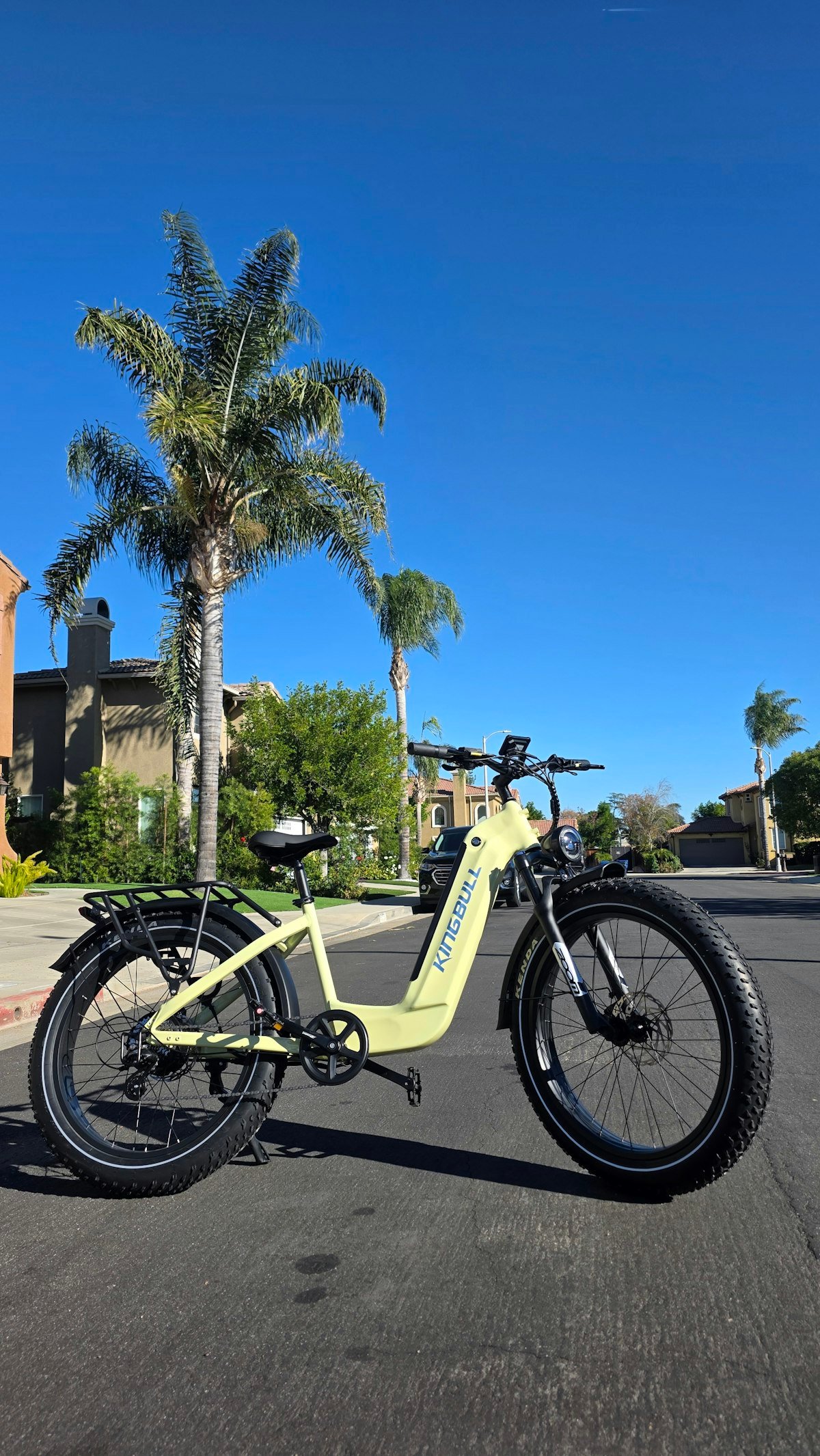
How to choose an e-bike for commuting
- Class and speed: Class 1 and 2 bikes assist to 20 mph; Class 3 goes to 28 mph. Many bikes can be switched between classes, but local laws vary, so check before you ride.
- Torque sensor: A torque sensor adds power in proportion to how hard you pedal, which feels smoother and safer in traffic than on/off cadence-only assist.
- Battery and real range: Claimed ranges assume eco mode on flat ground. Hills, boost mode, wind and cold weather cut range, so buy at least 1.5 times your round-trip distance.
- Weight and storage: Most commuter e-bikes weigh 55–65 lb. If you climb stairs or use a car rack, a lighter belt-drive bike or a folder makes life easier.
- Commuter gear: Built-in lights, fenders and a rack save money and hassle. A removable battery lets you charge at your desk.
- Safety ratings: Look for UL 2849 or UL 2271 certification for the electrical system and battery, plus an IP rating for rain.
FAQ
What is the best e-bike class for commuting?
Class 1 or 2 (20 mph) works for most city commutes and is allowed on most bike paths. Class 3 (28 mph) is great for longer, faster road commutes, but it’s restricted on some paths and has age rules in some states.
How far can a commuter e-bike go on one charge?
Real-world range is typically 25–70 miles depending on battery size, assist level, terrain, rider weight and temperature. Expect the advertised figure only in the lowest assist mode on flat roads.
Can I ride an e-bike in the rain?
Most commuter e-bikes handle rain if they have an IP rating (such as IPX5 to IPX7), but avoid submerging them or pressure-washing the motor and battery. Fenders and lights make wet commutes much safer.
How do I keep my e-bike from being stolen?
Use a heavy U-lock or chain through the frame, take a removable battery with you, and use built-in features like PIN locks, NFC locks or GPS and phone tracking when your bike has them.
Related guides
- The Best Electric Cargo Bikes of 2026
- The Best Pellet Grills
- The Best Dual Fuel Generators
- The Best Fat Tire Electric Bikes
- The Best Electric Scooters for Adults
- The Best Folding Electric Bikes of 2026 for Small Spaces
- Outdoor, Kitchen & Pet Buying Guides
Sources
We drew specs and testing notes from Popular Science, BikeRadar and Ride Review, plus manufacturer specifications. Owner feedback is summarized in our own words from public reviews. Photos courtesy of Unsplash.